Asthma
Asthma is a chronic inflammatory disorder of the airways causing recurrent episodes of wheeze, breathlessness, chest tightness and cough, with variable, reversible airflow obstruction and bronchial hyper-responsiveness.
Treatment at a glance
- Short-acting beta-agonist (salbutamol) as needed
- Regular inhaled corticosteroid (beclometasone)
Asthma
- A chronic inflammatory disorder of the airways causing recurrent episodes of wheezing, breathlessness, chest tightness, and cough (particularly at night or early morning).
- Hallmarks : Intermittent reversible airway obstruction, chronic bronchial inflammation with eosinophils, bronchial smooth muscle hypertrophy and hyperreactivity, and increased mucus secretion.
- The incidence has increased significantly in Western countries over the past four decades.
- The hygiene hypothesis suggests that reduced exposure to infectious organisms in early childhood may lead to defects in immune tolerance, predisposing to later hyperreactivity.
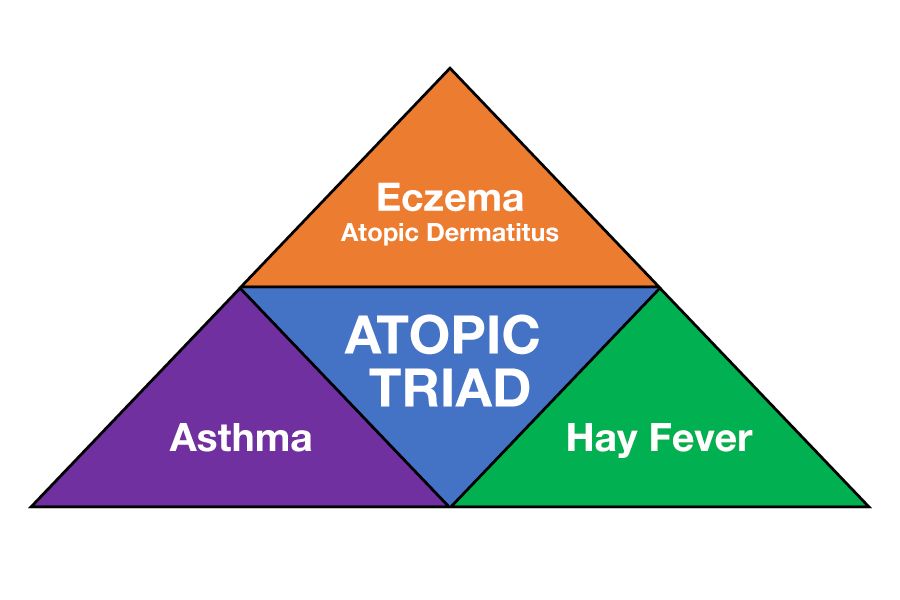
- Atopic Asthma (most common)
Read this in Lung Pathology — Must-Know
Asthma
- Hallmarks: Reversible airway obstruction, eosinophilic inflammation, smooth muscle hypertrophy
- Atopic Asthma: IgE-mediated (Type I hypersensitivity) driven by TH2 cells (IL-4, IL-5, IL-13)
- Morphology: Curschmann spirals + Charcot-Leyden crystals in sputum
What our notes say
- Asthma is a chronic inflammatory disorder of the airways causing recurrent episodes of wheeze, breathlessness, chest tightness and cough, with variable, reversible airflow obstruction and bronchial hyper-responsiveness. (Asthma)
- Occupational asthma: asthma caused by a workplace agent. (Occupational Lung Disease)
- | Secondary spontaneous | Underlying lung disease: COPD (commonest), TB, PCP (HIV), cystic fibrosis, asthma, lung cancer, ILD, Marfan syndrome, catamenial (menstrual) | (Pneumothorax)
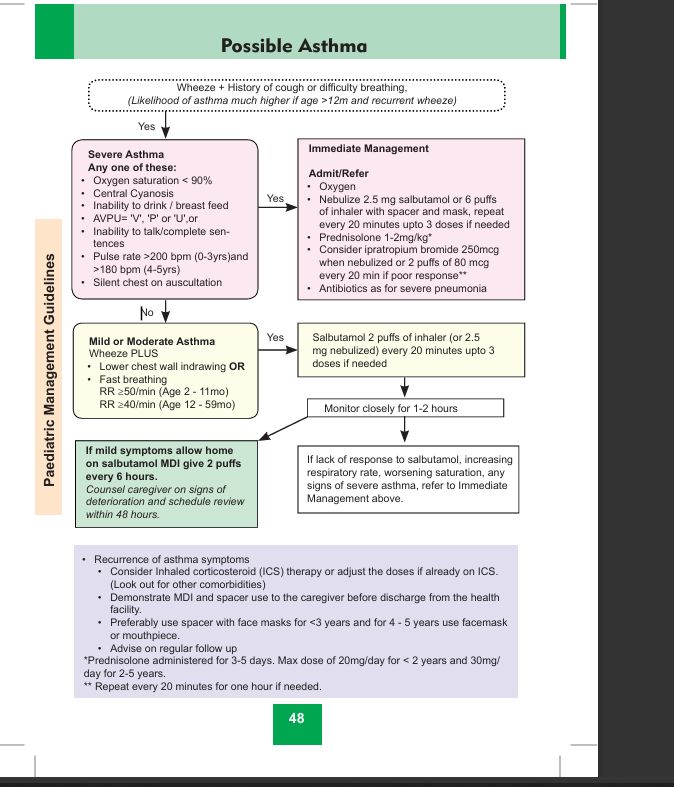
- Doses and stepwise plans follow GINA and BTS/SIGN; check the Kenya MoH asthma guideline and the drugs available at your facility.* (Asthma)
- Complications: pneumonia, post-infectious cough, asthma exacerbation. (Bronchitis (Acute and Chronic))
- Exclude TB, bronchiectasis, cancer and asthma in a patient with chronic cough. (Bronchitis (Acute and Chronic))
Study material on Asthma
- Asthma
- Bronchial Asthma: Pathophysiology, Diagnosis and GINA Stepwise Management
- Lung Pathology — Must-Know
- Respiratory System Pathology 1A
- Examination of Respiratory system
- Paediatrics main exam (MBPE 4300): 24 January 2022, Paper One, 100 MCQs, 2 short essays and 2 long essays
- Cardiovascular system examination revised 2012
- Respiratory Medicine Question Bank: 15 Clinical MCQs
- Respiratory system pathology mcqs
- Occupational Lung Disease
- Respiratory Pathology
- Respiratory System Pathology 1A — Practice Questions
- Respiratory System Pathology 1A — Practice Questions
- Respiratory Pathology 1b
- Respiratory Pathology 1b
- COMPREHENSIVE BASIC PHARMACOLOGY - 120 CHALLENGING MCQs
Images
Practice questions on Asthma
A 38-year-old woman with asthma develops peripheral blood eosinophilia of 18%, p-ANCA positivity, and a new mononeuritis multiplex. CXR shows transient pulmonary infiltrates. What is the most likely diagnosis?
- Granulomatosis with Polyangiitis
- Eosinophilic Granulomatosis with Polyangiitis (Churg-Strauss)
- Microscopic Polyangiitis
- Polyarteritis Nodosa
Answer: B. The combination of asthma, peripheral eosinophilia, p-ANCA positivity, mononeuritis multiplex, and transient pulmonary infiltrates is highly suggestive of Eosinophilic Granulomatosis with Polyangiitis (EGPA), formerly known as Churg-Strauss syndrome.
Inhalation is the preferred route for asthma medications because:
- First-pass metabolism enhances efficacy
- Complete systemic absorption is achieved
- High local drug concentrations with minimal systemic effects
- Faster than IV administration
Answer: C. Inhalation delivers high drug concentrations directly to the lungs (site of action) while minimizing systemic exposure and side effects (e.g., albuterol, corticosteroids). ---
A patient requires treatment for hypertension but also has asthma. Which antihypertensive should be AVOIDED?
- Non-selective beta-blockers
- ACE inhibitors
- Thiazide diuretics
- Calcium channel blockers
Answer: A. (like propranolol) can block β2-receptors in bronchial smooth muscle, causing bronchoconstriction and worsening asthma. Use cardioselective β1-blockers if needed. ---
A 38-year-old woman with asthma develops peripheral blood eosinophilia of 18%, p-ANCA positivity, and a new mononeuritis multiplex. CXR shows transient pulmonary infiltrates. Most likely diagnosis?
- Eosinophilic granulomatosis with polyangiitis (EGPA)
- Granulomatosis with polyangiitis (GPA)
- Microscopic polyangiitis (MPA)
- Churg-Strauss syndrome
Answer: A. Eosinophilic granulomatosis with polyangiitis (EGPA), also known as Churg-Strauss syndrome, is characterized by asthma, peripheral eosinophilia, Löffler's syndrome (transient pulmonary infiltrates), and systemic vasculitis (often presenting as mononeuritis multiplex). p-ANCA positivity is also common.
A 38-year-old woman with asthma develops peripheral blood eosinophilia of 18%, p-ANCA positivity, and a new mononeuritis multiplex. CXR shows transient pulmonary infiltrates. Most likely diagnosis?
- Eosinophilic granulomatosis with polyangiitis (Churg-Strauss)
- Granulomatosis with polyangiitis (Wegener's)
- Microscopic polyangiitis
- Polyarteritis nodosa
Answer: A. The presence of asthma, eosinophilia, p-ANCA positivity, mononeuritis multiplex, and transient pulmonary infiltrates is highly suggestive of Eosinophilic Granulomatosis with Polyangiitis (formerly Churg-Strauss syndrome).
A 38-year-old woman with asthma develops peripheral blood eosinophilia of 18%, p-ANCA positivity, and a new mononeuritis multiplex. CXR shows transient pulmonary infiltrates. What is the most likely diagnosis?
- Granulomatosis with polyangiitis (Wegener's)
- Eosinophilic granulomatosis with polyangiitis (Churg-Strauss)
- Microscopic polyangiitis
- Polyarteritis nodosa
Answer: B. The combination of asthma, eosinophilia, p-ANCA positivity, mononeuritis multiplex, and transient pulmonary infiltrates is highly suggestive of Eosinophilic Granulomatosis with Polyangiitis (EGPA), also known as Churg-Strauss syndrome.