Pneumothorax
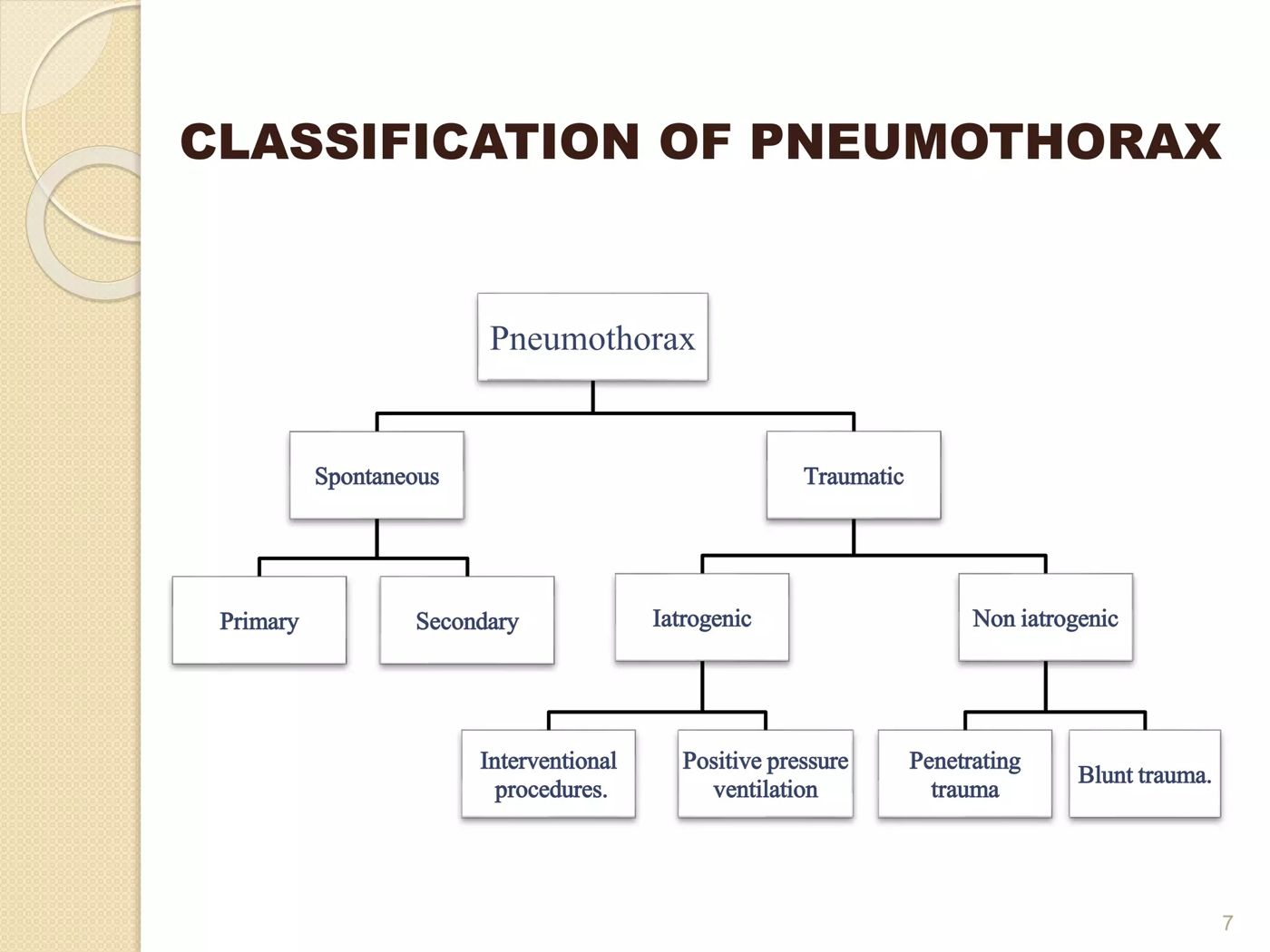
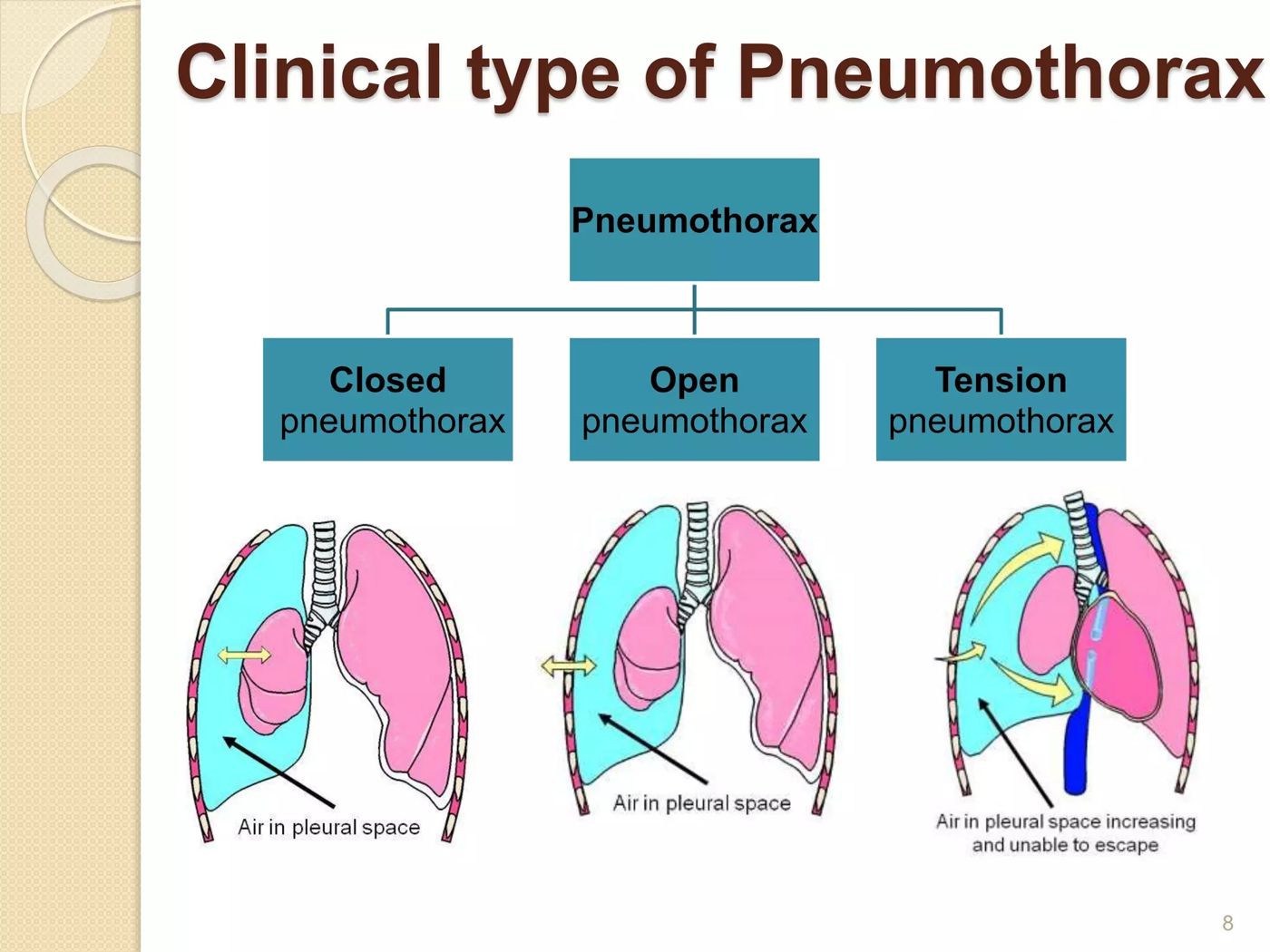
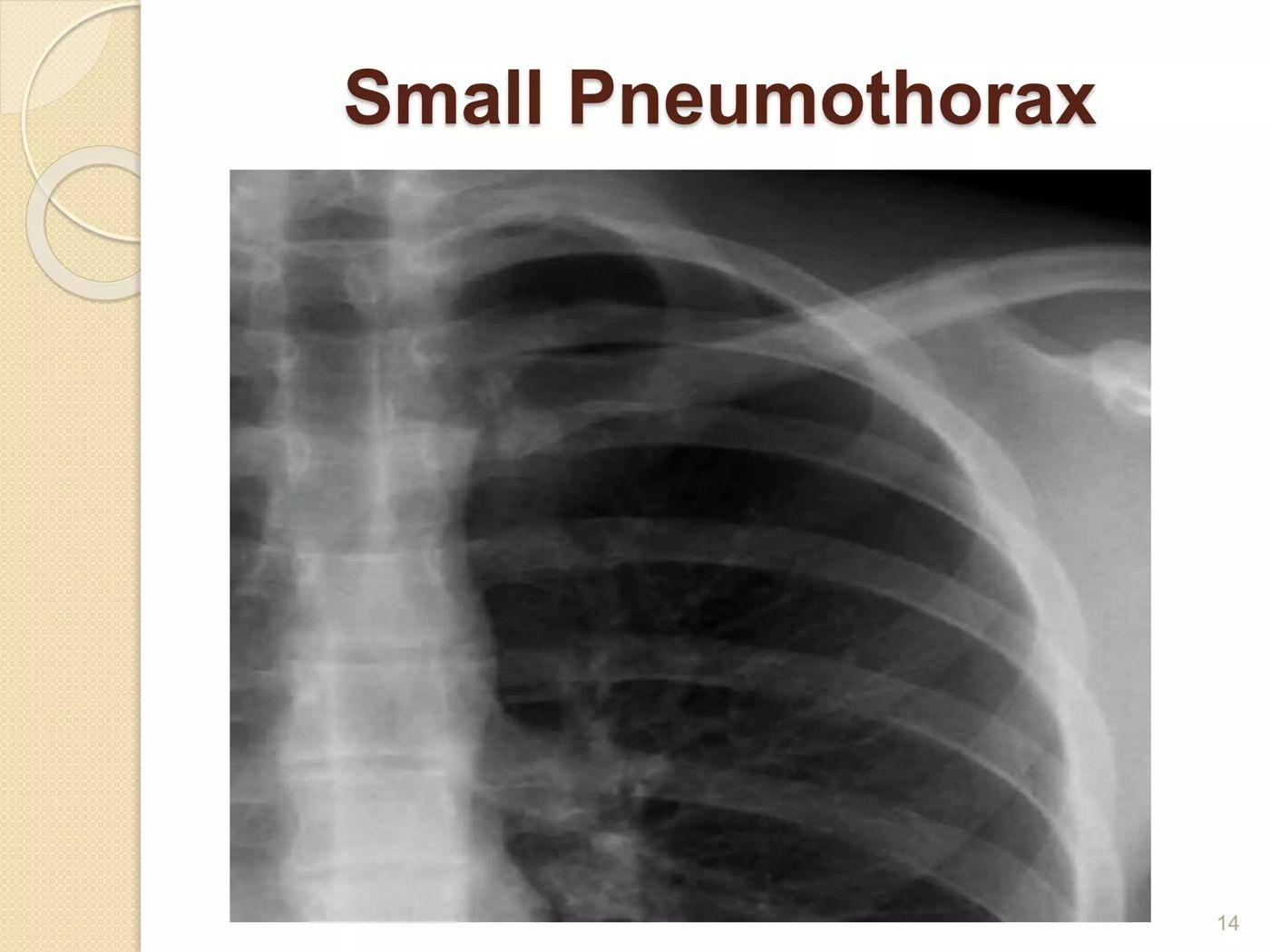
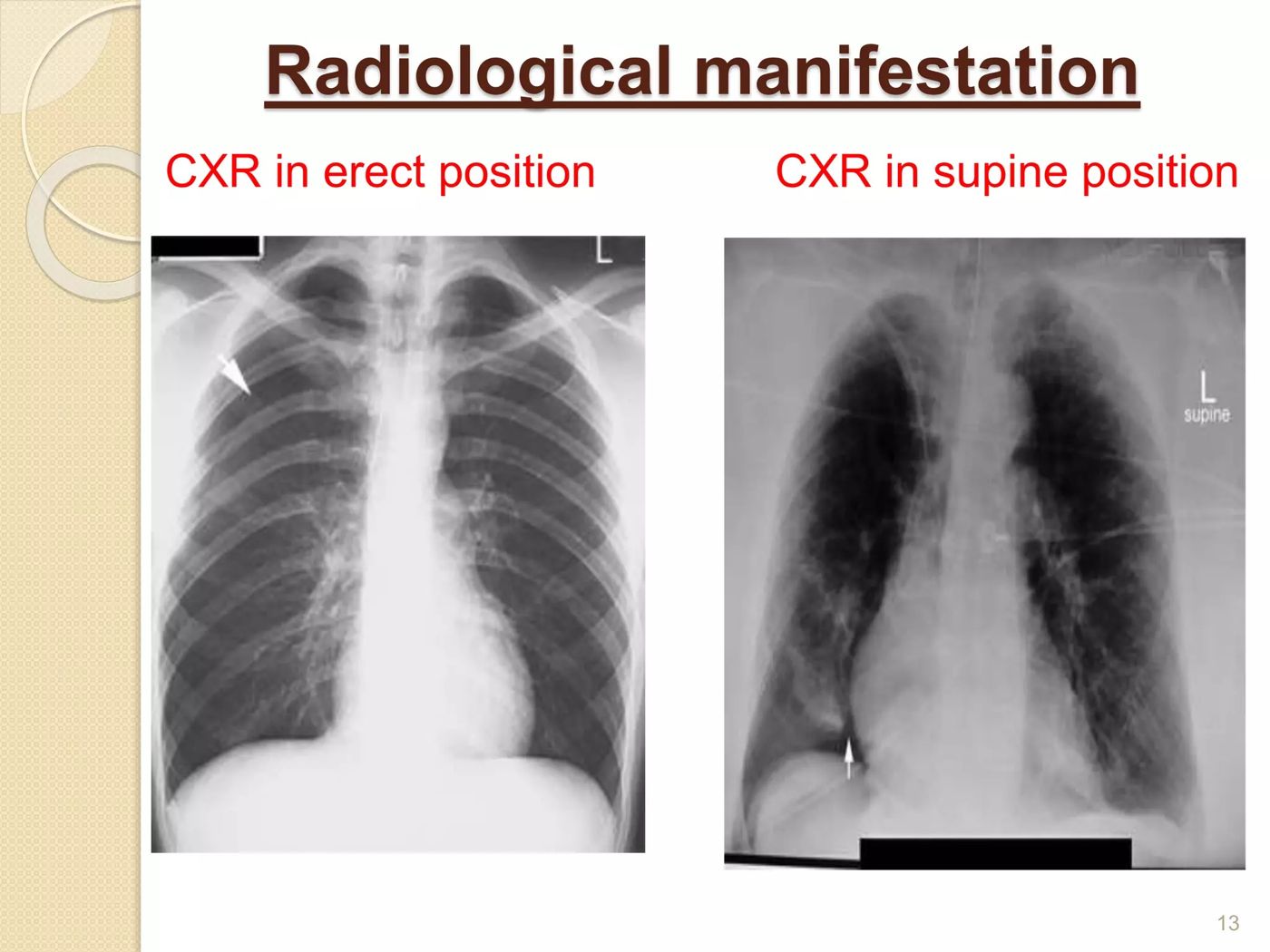
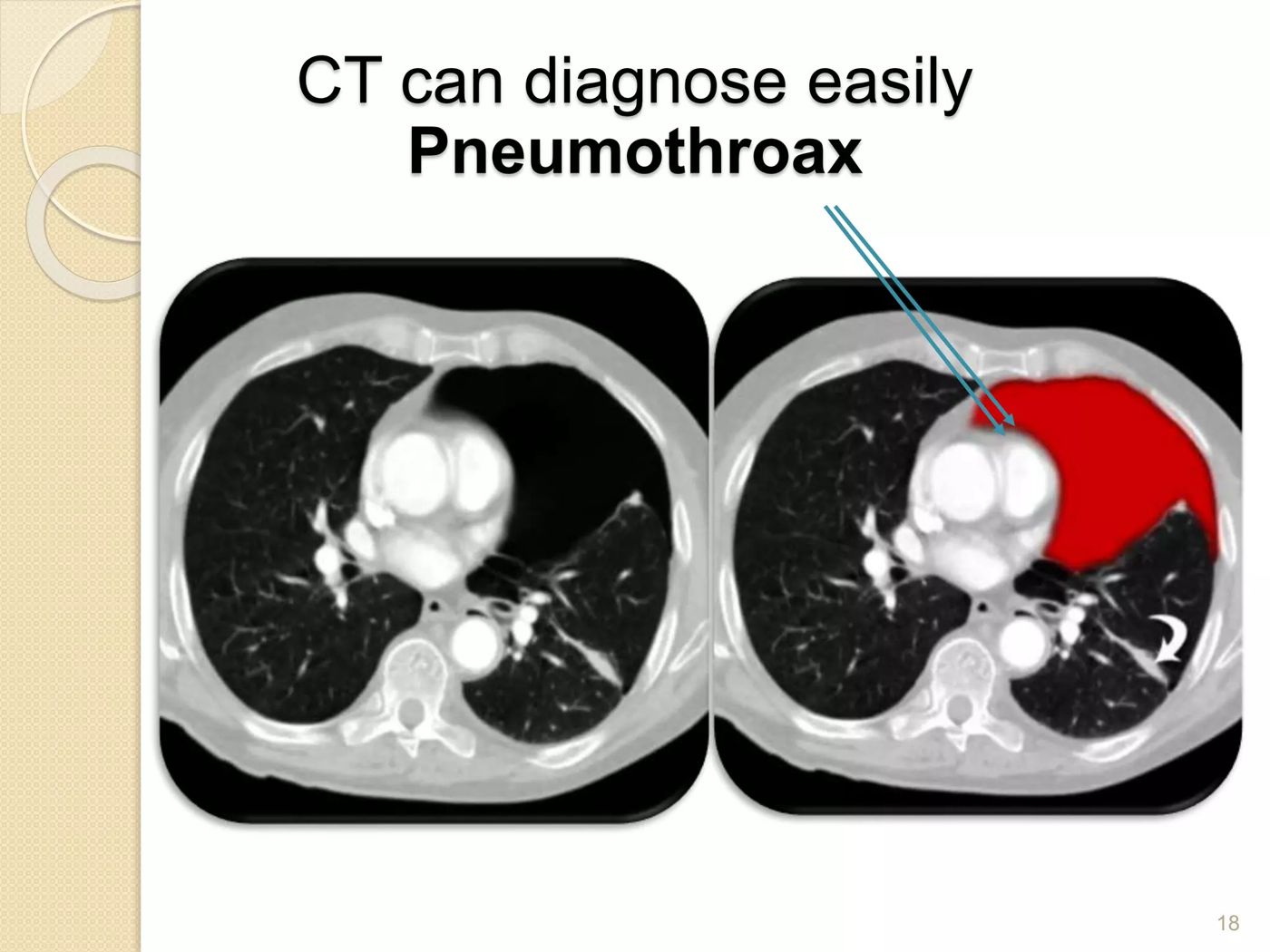
A pneumothorax is air in the pleural space, which allows the lung to collapse away from the chest wall.
Pneumothorax
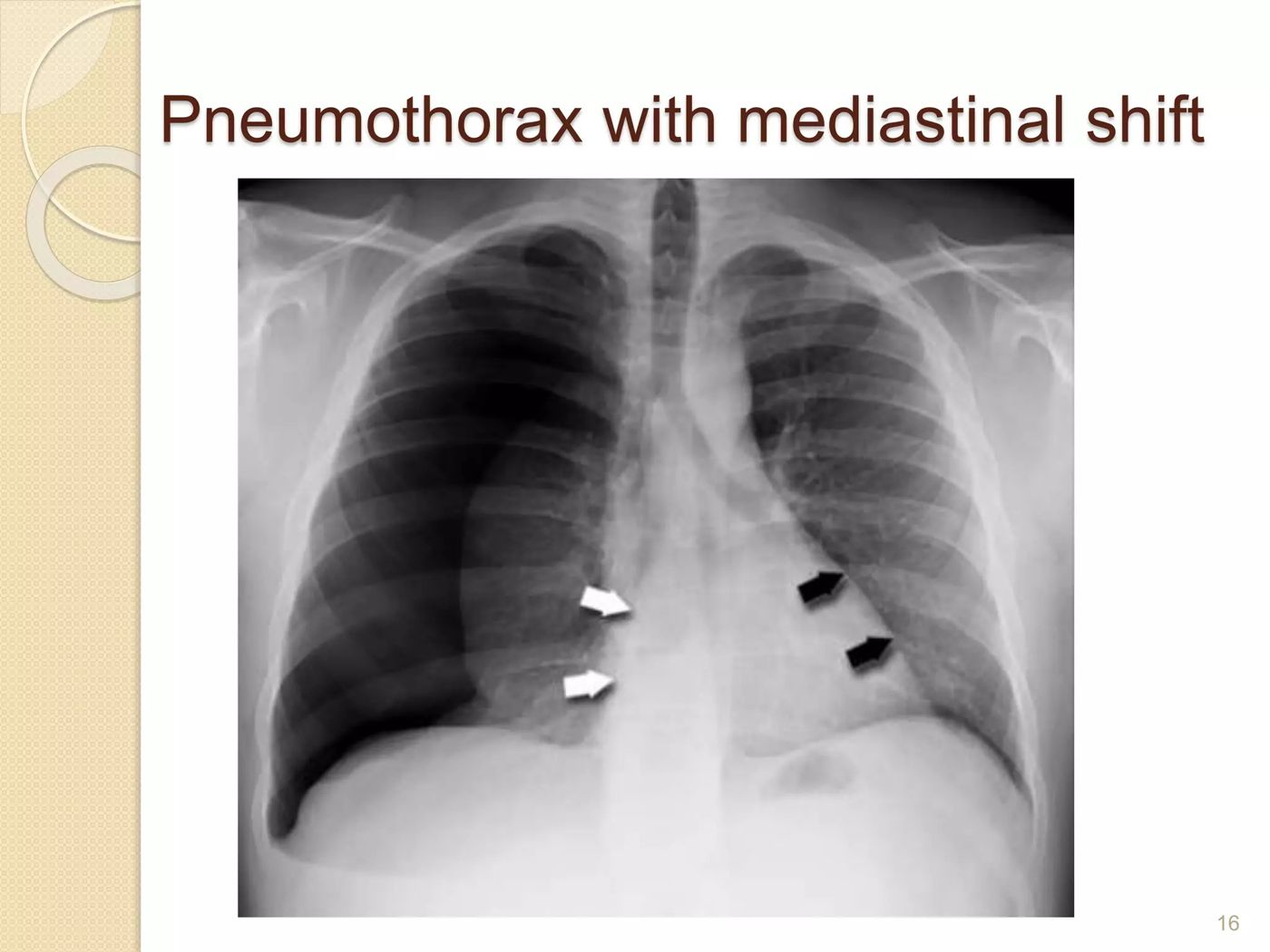
- Hyperinflation raises the risk of apical rupture → absent breath sounds on one side, tracheal deviation, sudden hypoxaemia.
Read this in Bronchial Asthma: Pathophysiology, Diagnosis and GINA Stepwise Management
What our notes say
- A pneumothorax is air in the pleural space, which allows the lung to collapse away from the chest wall. (Pneumothorax)
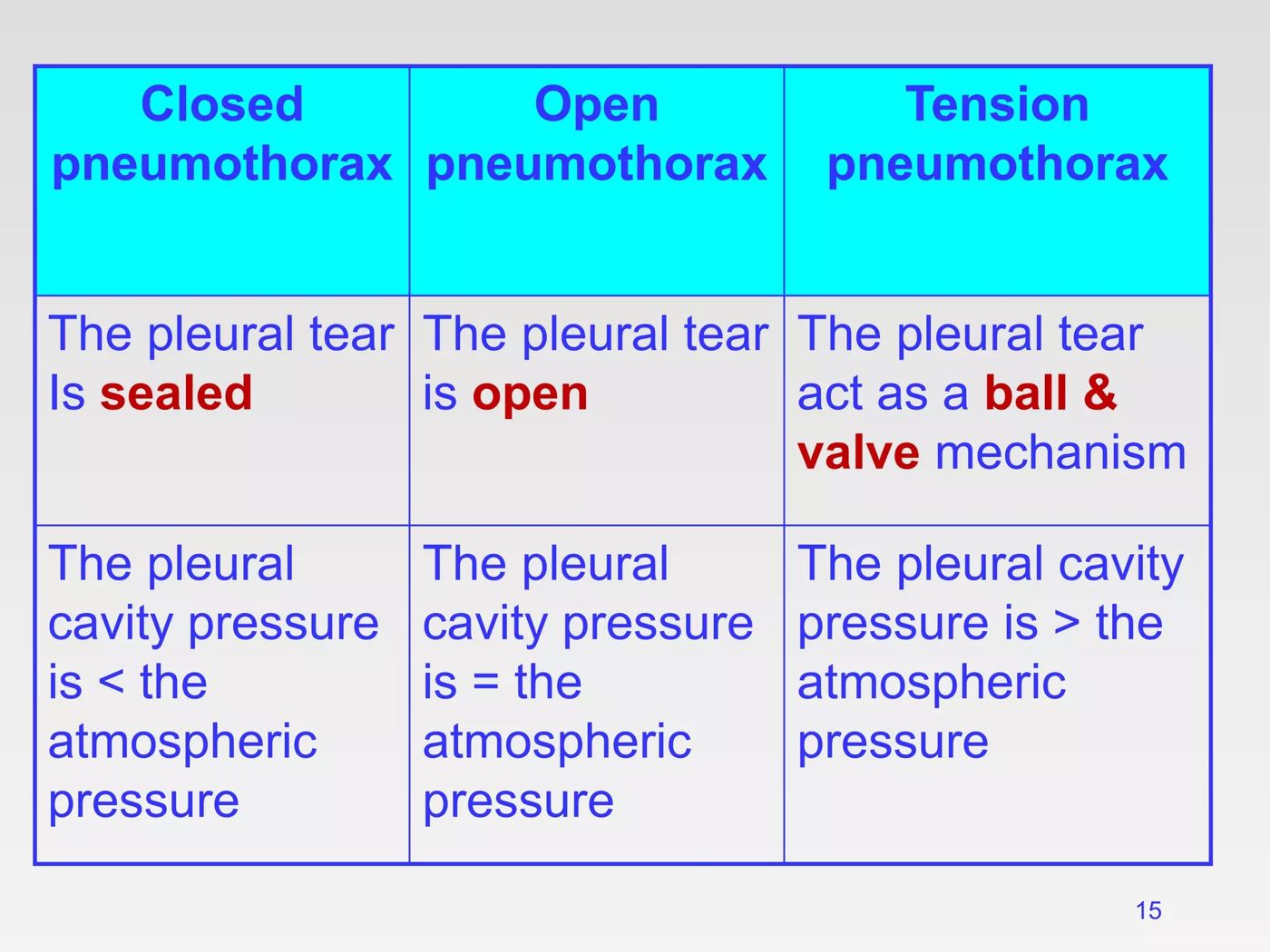
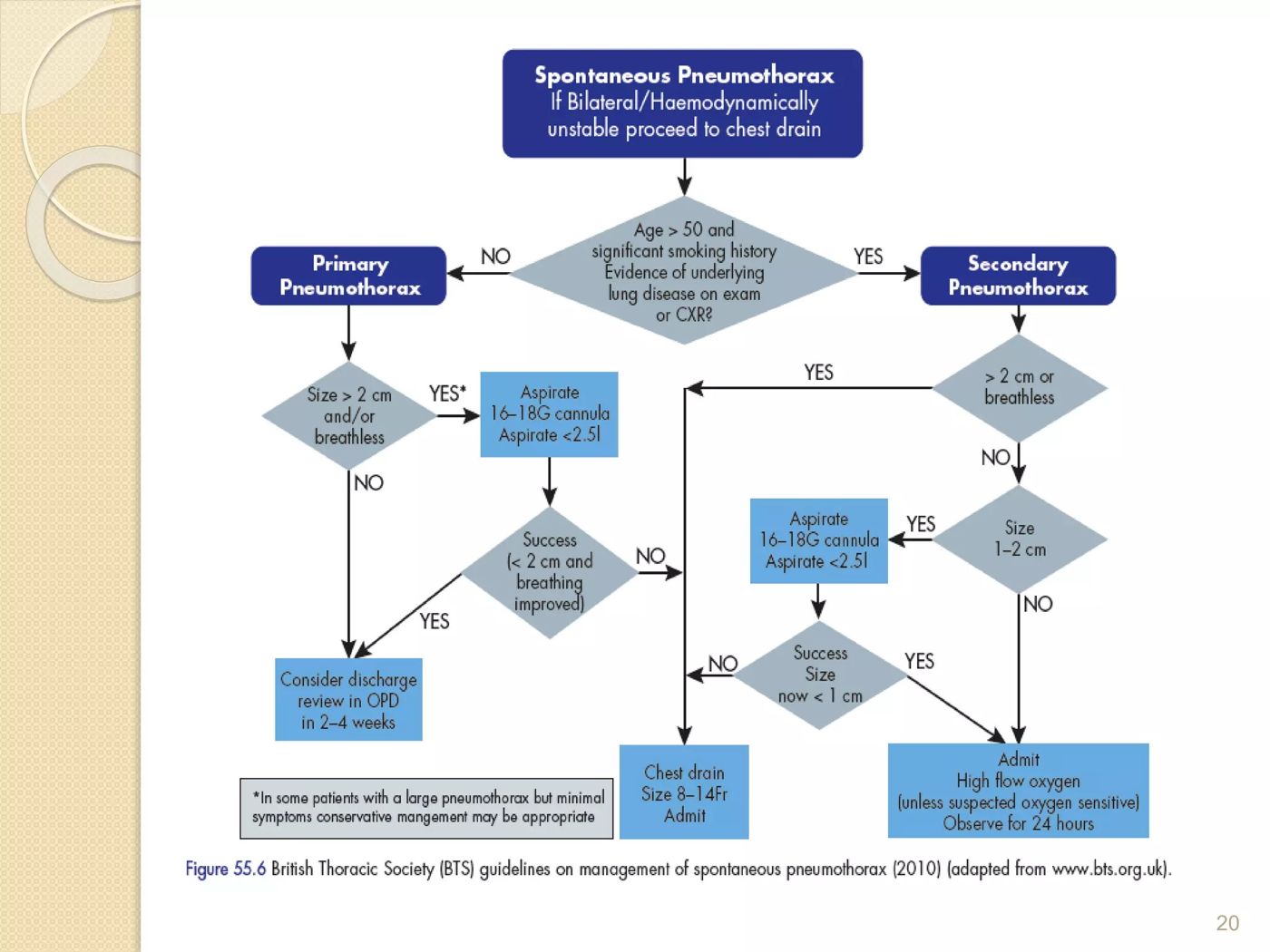
- Tracheal deviation with haemodynamic compromise indicates tension pneumothorax, which is a clinical diagnosis that needs immediate decompression, then a chest drain. (Respiratory Medicine Question Bank: 15 Clinical MCQs)
- Empyema, pleural thickening and fibrosis (trapped lung), respiratory failure, re-expansion pulmonary oedema, pneumothorax and bleeding from aspiration. (Pleural Effusion)
- Pneumothorax — Year 4 Internal Medicine (Respiratory) Notes (Pneumothorax)
- Status asthmaticus, respiratory failure, pneumothorax, pneumonia, lung remodelling with fixed obstruction, steroid side effects, death. (Asthma)
- Chest X-ray: hyperinflation, flattened diaphragms, bullae, enlarged hila; excludes lung cancer, pneumothorax, heart failure. (Chronic Obstructive Pulmonary Disease (COPD))
Study material on Pneumothorax
- Pneumothorax: Classification, Clinical Features and Emergency Management
- Pneumothorax
- Examination of Respiratory system
- General Clinical Examination: Revision Notes & Key Signs
- Respiratory System Pathology 1A
- Respiratory Medicine Question Bank: 15 Clinical MCQs
- High-Yield Clinical Exam Notes: Cranial Nerves, Respiratory, Cardio
- Cardiovascular system examination revised 2012
- Respiratory system pathology mcqs
- Cranial Nerves, Eye Exam & Vital Signs: MBChB Clinical Revision
Images
Practice questions on Pneumothorax
A 30-year-old non-smoker with spontaneous pneumothorax and subpleural bulla. Which emphysema is responsible?
- Centriacinar
- Panacinar
- Paraseptal (distal acinar)
- Irregular
Answer: C. Paraseptal emphysema involves the distal part of the acinus near the pleura and is the most common cause of spontaneous pneumothorax in young adults. ---
A 30-year-old presents with spontaneous pneumothorax. The most likely underlying emphysema type is
- Centriacinar emphysema
- Panacinar emphysema
- Irregular emphysema
- Distal acinar (paraseptal) emphysema
Answer: D. Paraseptal emphysema affects the distal acinus adjacent to the pleura, forming bullae. Rupture of subpleural bullae causes spontaneous pneumothorax in young adults. ---
A 30-year-old non-smoking male develops spontaneous left pneumothorax. CT reveals a subpleural bulla. Which emphysema subtype is responsible?
- Centriacinar emphysema destroying respiratory bronchioles from cigarette smoking
- Panacinar emphysema from α1-antitrypsin deficiency affecting the entire acinus
- Distal acinar (paraseptal) emphysema producing subpleural bullae in young adults
- Irregular emphysema from healed pulmonary inflammation adjacent to scar tissue
Answer: C. Distal acinar emphysema affects the subpleural distal acinus in young adults without smoking history, producing subpleural bullae that rupture causing spontaneous pneumothorax. ---
A 30-year-old presents with spontaneous pneumothorax. The most likely underlying emphysema type is:
- Centriacinar emphysema
- Panacinar emphysema
- Paraseptal emphysema
- Irregular emphysema
Answer: C. Spontaneous pneumothorax, especially in young adults without significant smoking history, is often associated with the rupture of subpleural blebs, which are characteristic of paraseptal (distal acinar) emphysema.
A 30-year-old presents with spontaneous pneumothorax. The most likely underlying emphysema type is:
- Centriacinar (centrilobular)
- Panacinar (panlobular)
- Paraseptal
- Irregular
Answer: B. Spontaneous pneumothorax, particularly in younger adults, is often associated with emphysema. Panacinar (panlobular) emphysema, which affects the entire alveolus and is often associated with alpha-1 antitrypsin deficiency, is more commonly linked to spontaneous pneumothorax. Centriacinar emphysema is more common in smokers and primarily affects the respiratory bronchioles.
A 30-year-old presents with spontaneous pneumothorax. The most likely underlying emphysema type is:
- Centriacinar (centrilobular) emphysema
- Panacinar (panlobular) emphysema
- Paraseptal emphysema
- Distal acinar emphysema
Answer: C. Spontaneous pneumothorax is often associated with paraseptal emphysema (also known as distal acinar emphysema). This type of emphysema involves the distal airways and alveoli, leading to the formation of bullae and blebs, which are prone to rupture and cause pneumothorax.