Pneumonia
Also written as PCP.
Pneumonia is infection of the lung parenchyma (alveoli and interstitium) with consolidation: the air spaces fill with inflammatory exudate.
Pneumonia
- Presentation: Typically community-acquired pneumonia (CAP). Sudden onset of fever, chills, productive cough (often with rust-colored sputum due to blood), pleuritic chest pain, and dyspnea. Physical examination may reveal lobar consolidatio
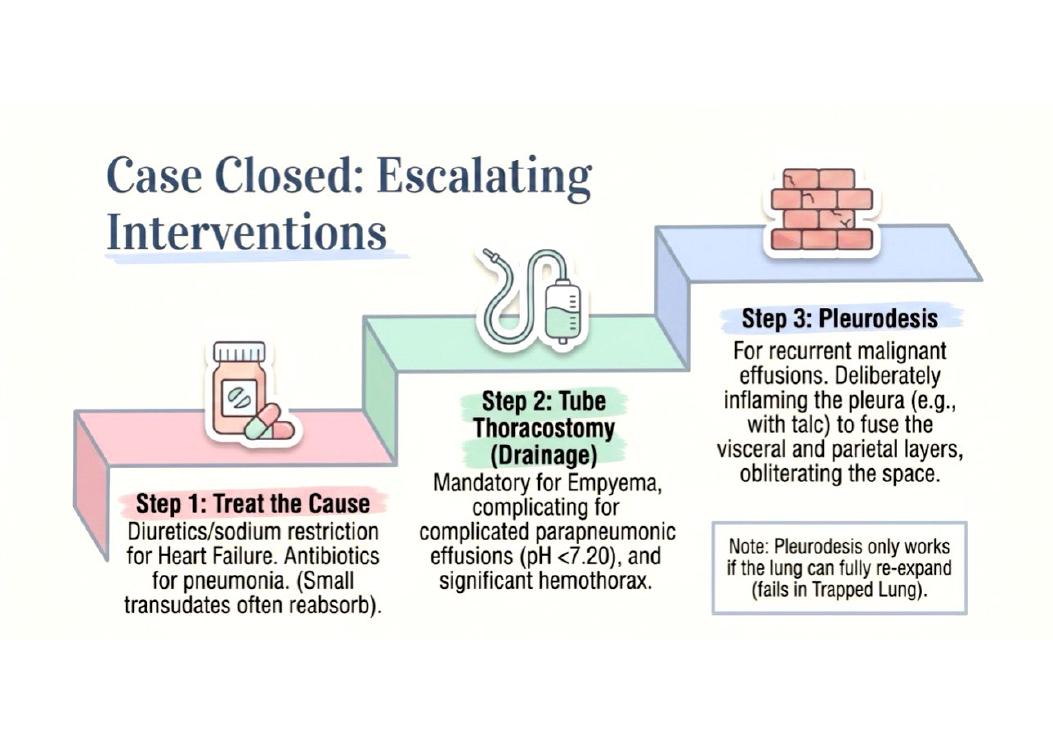
- Complications: Empyema (pus in pleural space), lung abscess, necrotizing pneumonia.
Read this in Streptococcus pneumoniae: Characteristics, Pathogenesis, and Management
What our notes say
- Pneumonia is infection of the lung parenchyma (alveoli and interstitium) with consolidation: the air spaces fill with inflammatory exudate. (Pneumonia)
- Chest X-ray is not routine unless pneumonia is suspected (older patient, high fever, tachycardia, tachypnoea, focal signs). (Bronchitis (Acute and Chronic))
- Antibiotics if sputum is purulent or pneumonia (amoxicillin, doxycycline or co-amoxiclav). (Chronic Obstructive Pulmonary Disease (COPD))
- Several small cavities (below 2 cm) in a pneumonic area are necrotising pneumonia. (Lung Abscess)
- Pneumonia — Year 4 Internal Medicine (Respiratory) Notes (Pneumonia)
- | Heart failure (commonest, bilateral) | Pneumonia (parapneumonic effusion, empyema) | (Pleural Effusion)
Study material on Pneumonia
- Pneumonia
- Lung Pathology — Must-Know
- End Sem Cat: Respiratory Pathology: Emphysema, ARDS, Pneumoconiosis
- Examination of Respiratory system
- Respiratory Pathology 1b
- Respiratory system pathology mcqs
- Respiratory System Pathology 1A
- Internal Medicine Respiratory CAT 1: 30 MCQs and 5 short answer questions
- Pharmco Notes
- Junior Clerkship in Internal Medicine (MBIM4100) main exam, Paper One: 31 January 2024
- Respiratory Pathology
- Weekly Year 2: Microbiology Exam - May 22, 2026 (Section A: MCQs)
- Weekly Year 2: Microbiology Exam - July 10, 2026 (Sections B & C)
- Respiratory Pathology 2
- Immuno Patho MCQS
- Weekly Year 2: Microbiology Exam - May 29, 2026 (Section A: MCQs)
Images
Practice questions on Pneumonia
Acute bronchiolitis and viral pneumonia are manifestations of:
- Upper respiratory tract infection
- Lower respiratory tract infection
- Tuberculous invasion
- AIDS
- Both a and b
Answer: B. Both processes occur below the larynx.
A male infant is born at term with no congenital anomalies noted. A year later he has failure to thrive and has had one bacterial pneumonia after another, with both *Haemophilus influenzae* and *Streptococcus pneumoniae* cultured from sputum. Which disease is he most likely to have?
- DiGeorge syndrome
- Selective IgA deficiency
- Epstein-Barr virus (EBV) infection
- Acute leukemia
- X-linked agammaglobulinemia
Answer: E. * Recurrent bacterial infections suggest impaired B-cell function with lack of immunoglobulin production. Once protective maternal antibodies wane, the disease manifests more severely. ---
A 77-year-old woman was started on antibiotics for pneumonia treatment. After 3 days of antibiotic therapy, the serum creatinine doubled. Which of the following antibiotics is most likely responsible for this increase in serum creatinine?
- Doxycycline
- Tobramycin
- Linezolid
- Clarithromycin
- Usually mediated by non-specific mechanisms
Answer: B. Aminoglycosides such as tobramycin accumulate in the proximal tubular cells of the kidney and disrupt calcium-mediated transport processes. This results in kidney damage ranging from mild, reversible renal impairment to severe, potentially irreversible acute tubular necrosis. Nephrotoxicity is not commonly associated with tetracyclines, macrolides, or oxazolidinones. ---
A 55-year-old man has had absolute neutrophil count of 900 for the past 6 months. He has had three episodes of bacterial pneumonia. He is otherwise healthy with no medications, no autoimmune disease, and no family history. Bone marrow is normocellular. Most likely explanation?
- Cyclic neutropenia
- Drug-induced agranulocytosis
- Severe congenital neutropenia
- Chronic idiopathic neutropenia
Answer: D. Persistent mild to moderate neutropenia in an otherwise healthy adult + normal bone marrow + no identifiable cause = chronic idiopathic neutropenia. Unlike cyclic neutropenia (periodic drops) or drug-induced agranulocytosis (acute, severe), this is a stable benign condition. ---
This bacterial species is the most common cause of "typical" pneumonia.
- H. influenzae
- S. pneumoniae
- M. pneumoniae
- L. pneumophila E.
Answer: A. *Streptococcus pneumoniae* is the leading cause of classic (lobar/typical) community-acquired pneumonia, distinguished clinically from "atypical" pneumonias caused by *Mycoplasma* or *Legionella*. --- ---
An 8-year-old boy had meconium ileus at birth, elevated sweat chloride, and recurrent Pseudomonas pneumonias. He is at greatest risk for which pulmonary abnormality?
- Adenocarcinoma
- Bronchiectasis
- Pleural fibrous plaques
- Pneumothorax
Answer: B. CF causes chronic airway inflammation and obstruction leading to bronchiectasis. Progressive loss of pulmonary vasculature leads to pulmonary hypertension and cor pulmonale. ---