Pleural Effusion
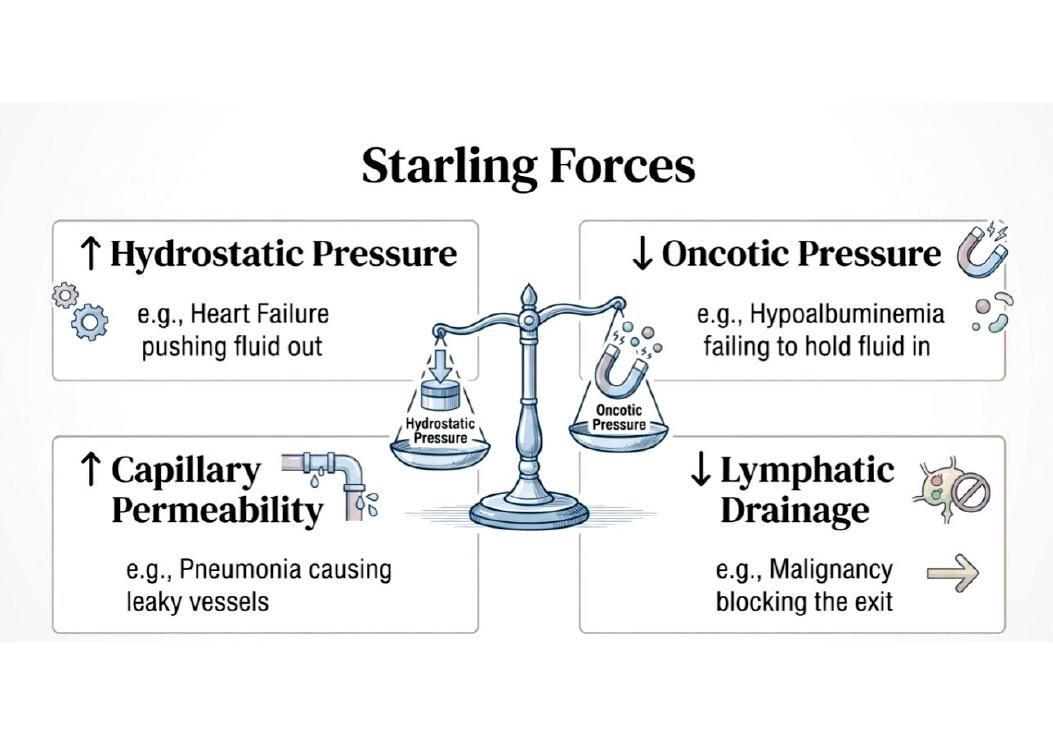
A pleural effusion is an abnormal collection of fluid in the pleural space (between the visceral and parietal pleura).
What our notes say
- A pleural effusion is an abnormal collection of fluid in the pleural space (between the visceral and parietal pleura). (Pleural Effusion)
- Oedema is periorbital in the morning, then generalised with ascites, pleural effusion and scrotal swelling. (Paediatrics and Child Health end of semester examination (MBPE): 10 January 2023)
- A transudative pleural effusion is present in all EXCEPT: (Junior Clerkship in Internal Medicine (MBIM4100) main exam, Paper One: 31 Januar)
- Pleural effusion is a collection of fluid in the alveoli (Internal Medicine (MBIM 4100) special/supplementary exam, Paper Two: 14 August 2)
- Pleural Effusion — Year 4 Internal Medicine (Respiratory) Notes (Pleural Effusion)
- Signs: finger clubbing (develops within weeks), poor dental hygiene, bronchial breathing, amphoric sound, crackles and pleural rub over the lesion; sometimes a pleural effusion. (Lung Abscess)
Study material on Pleural Effusion
- Pleural Effusion
- Pleural Effusion: Light's Criteria, Fluid Analysis and Management
- Examination of Respiratory system
- High-Yield Clinical Exam Notes: Cranial Nerves, Respiratory, Cardio
- Internal Medicine Respiratory CAT 1: 30 MCQs and 5 short answer questions
- Cardiovascular system examination revised 2012
- General Clinical Examination: Revision Notes & Key Signs
- Chest X-ray Interpretation Guide: ABCDE Approach for Medical Students
- Internal Medicine (MBIM 4100) special/supplementary exam, Paper Two: 14 August 2019
- Cranial Nerves, Eye Exam & Vital Signs: MBChB Clinical Revision
- Respiratory McQs 2
- Weekly Pathology Exam - October 9, 2026 (Section A: MCQs)
- Weekly Pathology Exam - October 2, 2026 (Section A: MCQs)
- Weekly Pathology Exam - September 25, 2026 (Section A: MCQs)
- Weekly Pathology Exam - September 11, 2026 (Section A: MCQs)
- Weekly Pathology Exam - September 4, 2026 (Section A: MCQs)
Images

Practice questions on Pleural Effusion
A 55-year-old man with heart failure has a right-sided pleural effusion. Thoracentesis shows fluid protein of 2.1 g/dL, serum protein 7.0 g/dL, fluid LDH 88 U/L, and serum LDH 300 U/L. What is the most likely type of effusion?
- Exudative
- Transudative
- Chylous
- Hemorrhagic
Answer: B. Using Light's criteria, this is a transudative effusion: Fluid protein/serum protein ratio is 2.1/7.0 = 0.3 ( < 0.5), and fluid LDH/serum LDH ratio is 88/300 = 0.29 (< 0.6). Heart failure is a common cause of transudative effusions.
A 48-year-old woman with breast cancer develops a right pleural effusion. Thoracentesis yields fluid protein of 5.2 g/dL, serum protein 6.8 g/dL, fluid LDH 420 U/L, and serum LDH 310 U/L. Cytology shows malignant cells. What is the most likely type of effusion?
- Transudative
- Exudative
- Malignant
- Serous
Answer: C. Using Light's criteria, this is an exudative effusion: Fluid protein/serum protein ratio is 5.2/6.8 = 0.76 ( > 0.5), and fluid LDH/serum LDH ratio is 420/310 = 1.35 ( > 0.6). The presence of malignant cells in the cytology confirms it as a malignant effusion, which is a subtype of exudative effusion.
A 35-year-old man undergoes thoracic duct injury during left-sided neck dissection surgery. Two days later he develops a left pleural effusion. Thoracentesis yields milky white fluid with triglycerides of 210 mg/dL. What is the most likely diagnosis?
- Hemothorax
- Chylothorax
- Hemopneumothorax
- Pleural effusion secondary to heart failure
Answer: B. A milky white pleural effusion with high triglyceride content is characteristic of chylothorax, resulting from leakage of lymphatic fluid from the thoracic duct.
A 55-year-old man with heart failure has a right-sided pleural effusion. Thoracentesis shows fluid protein of 2.1 g/dL, serum protein 7.0 g/dL, fluid LDH 88 U/L, and serum LDH 300 U/L. Most likely type of effusion?
- Transudate
- Exudate
- Chylothorax
- Hemothorax
Answer: A. Using Light's criteria: Fluid protein/serum protein ratio (2.1/7.0 = 0.3) is <0.5. Fluid LDH/serum LDH ratio (88/300 ≈ 0.29) is <0.6. Fluid LDH is <2/3 the upper limit of normal serum LDH (assuming upper limit is ~200 U/L, 88 is < ~133). These findings are characteristic of a transudative effusion, commonly seen in heart failure.
A 48-year-old woman with breast cancer develops a right pleural effusion. Thoracentesis yields fluid protein of 5.2 g/dL, serum protein 6.8 g/dL, fluid LDH 420 U/L, and serum LDH 310 U/L. Cytology shows malignant cells. Most likely type of effusion?
- Transudate
- Exudate
- Chylothorax
- Hemothorax
Answer: B. Using Light's criteria: Fluid protein/serum protein ratio (5.2/6.8 ≈ 0.76) is >0.5. Fluid LDH (420 U/L) is >2/3 the upper limit of normal serum LDH (assuming upper limit is ~200 U/L, 420 is > ~133). These findings are characteristic of an exudative effusion. Given the history of breast cancer and malignant cells on cytology, this is a malignant pleural effusion.
A 35-year-old man undergoes thoracic duct injury during left-sided neck dissection surgery. Two days later he develops a left pleural effusion. Thoracentesis yields milky white fluid with triglycerides of 210 mg/dL. Most likely diagnosis?
- Chylothorax
- Parapneumonic effusion
- Hemothorax
- Pseudochylothorax
Answer: A. A milky white pleural effusion with elevated triglyceride levels (typically >110 mg/dL) is diagnostic of chylothorax, which results from leakage of lymphatic fluid from the thoracic duct. Thoracic duct injury is a common cause.