Heart Failure
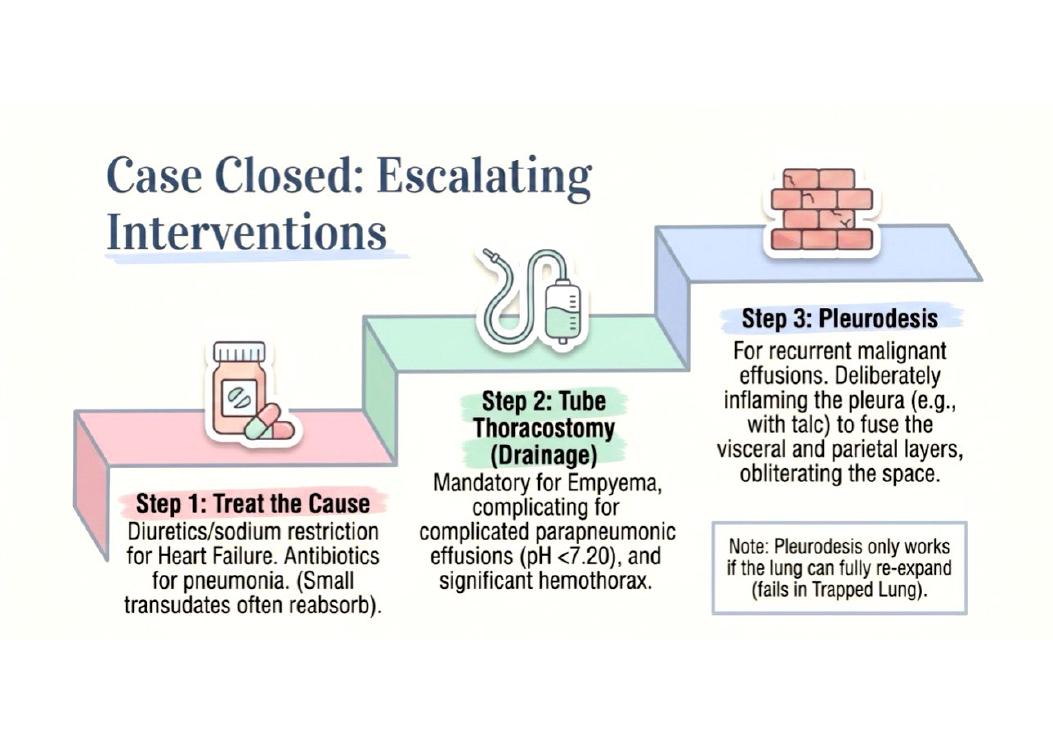
Consider if the patient is systemically unwell, very frail, has comorbidity (COPD, heart failure), or pertussis is suspected (macrolide).
Treatment at a glance
- ACE inhibitor or ARB (or ARNI)
- Beta-blocker (bisoprolol, carvedilol)
- Mineralocorticoid antagonist (spironolactone)
Heart Failure
- Left HF: Results in pulmonary congestion , manifesting as dyspnea , orthopnea , paroxysmal nocturnal dyspnea (PND) , and hemoptysis . The lung tissue often shows hemosiderin-laden macrophages (also known as heart failure cells ).
- Right HF: The most common cause is left HF . Clinical signs include jugular venous distention (JVD) , peripheral edema , hepatomegaly , and ascites . The liver characteristically shows a nutmeg appearance .
- Pressure overload (e.g., HTN, AS) leads to concentric hypertrophy , where sarcomeres are added in parallel.
- Volume overload (e.g., AR, MR) leads to eccentric hypertrophy , where sarcomeres are added in series.
Read this in Heart Pathology: Comprehensive Short Notes
Heart Failure (essay-style — 56yo lady vignette)
- Symptoms: dyspnoea (exertional/orthopnoea/PND), fatigue, chest pain, palpitations, ankle swelling, weight gain, reduced exercise tolerance.
- Exam findings: raised JVP, displaced apex, S3 gallop, bibasal crackles, peripheral oedema, hepatomegaly, ascites, cool peripheries, tachycardia.
- Cause-finding history: prior MI/IHD, hypertension, valvular disease, arrhythmias, alcohol use, thyroid disease, anaemia, infections (viral myocarditis), cardiotoxic drugs.
Read this in Cranial Nerves, Eye Exam & Vital Signs: MBChB Clinical Revision
What our notes say
- Consider if the patient is systemically unwell, very frail, has comorbidity (COPD, heart failure), or pertussis is suspected (macrolide). (Bronchitis (Acute and Chronic))
- Her heart failure is not ischaemic, and statins have not shown a survival benefit in non-ischaemic heart failure. (Clinical Pharmacology I (MBPL 4400) main exam: 25 January 2023)
- Review at 48 hours; if no improvement, think of empyema, resistant or unusual organism, TB, obstruction (cancer), wrong diagnosis (PE, heart failure). (Pneumonia)
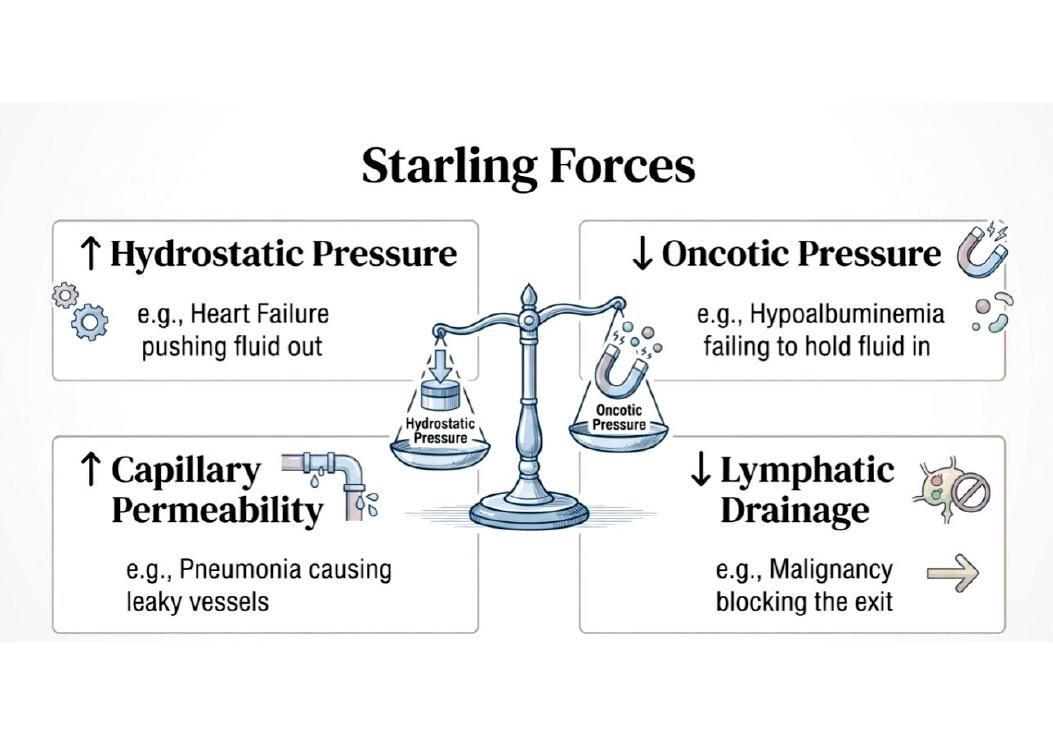
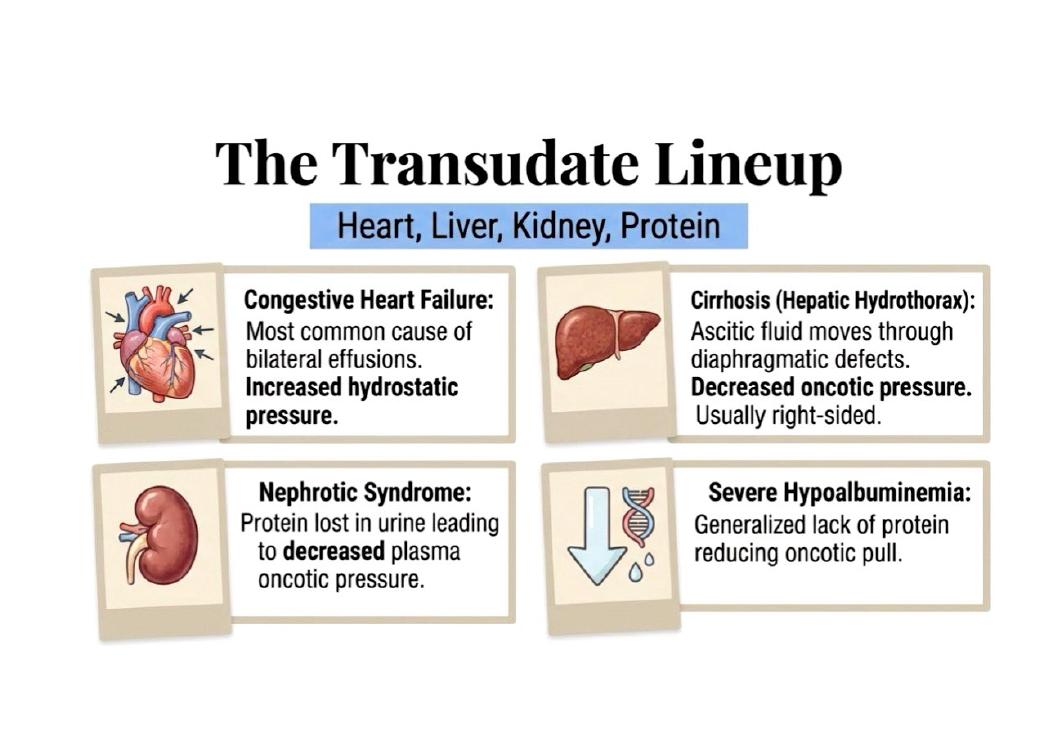
- Increased hydrostatic pressure (heart failure) → transudate. (Pleural Effusion)
- | Heart failure (commonest, bilateral) | Pneumonia (parapneumonic effusion, empyema) | (Pleural Effusion)
- Differential: COPD, heart failure ("cardiac asthma"), GORD, vocal cord dysfunction, bronchiectasis, foreign body, PE. (Asthma)
Study material on Heart Failure
- Heart failure: which tests and why
- CARDIOVASCULAR PATHOLOGY
- Heart Disease — Must Knows
- Heart Disease: Must Knows
- Junior Clerkship in Internal Medicine (MBIM4100) main exam, Paper One: 31 January 2024
- Liver Histology & Physiology
- Liver Histology & Physiology
- Clinical Pharmacology I (MBPL 4400) main exam: 25 January 2023
- Internal Medicine (MBIM 4100) special/supplementary exam, Paper Two: 14 August 2019
- Paediatrics Year 6 MBChB end of semester CAT: clinical case MCQs, 29 of 30 questions
- Heart Disease: Must Knows
- Heart Disease: Must Knows
- Cardiovascular Disease and Biochemical Markers MCQs
- Weekly Pathology Exam - June 19, 2026 (Section A: MCQs)
- Heart Disease — Must Knows
- Pathology Papers: Scanned Revision Notes & Past Questions
Images

Practice questions on Heart Failure
A 55-year-old man with heart failure has a right-sided pleural effusion. Thoracentesis shows fluid protein of 2.1 g/dL, serum protein 7.0 g/dL, fluid LDH 88 U/L, and serum LDH 300 U/L. What is the most likely type of effusion?
- Exudative
- Transudative
- Chylous
- Hemorrhagic
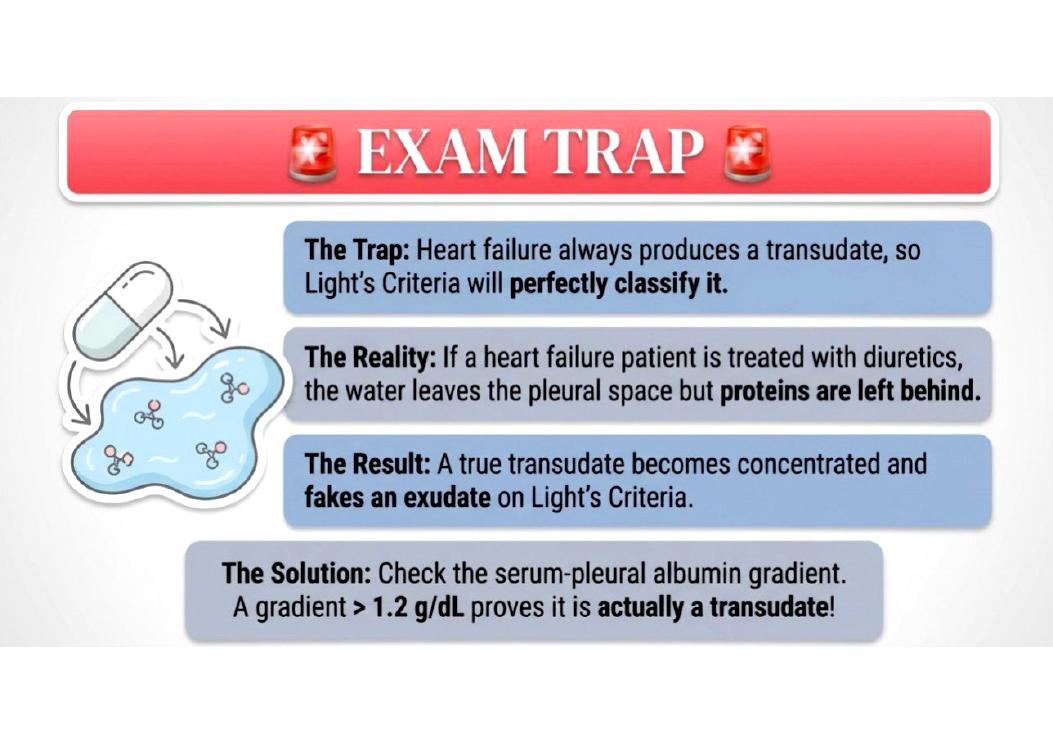
Answer: B. Using Light's criteria, this is a transudative effusion: Fluid protein/serum protein ratio is 2.1/7.0 = 0.3 ( < 0.5), and fluid LDH/serum LDH ratio is 88/300 = 0.29 (< 0.6). Heart failure is a common cause of transudative effusions.
50-year-old female, systemic sclerosis, right heart failure, PCWP normal, PVR markedly elevated. Vascular pathology MOST responsible?
- Pulmonary venous hypertension from left heart disease
- Pulmonary arteriolar intimal fibrosis and medial hypertrophy (PAH)
- Multiple pulmonary emboli causing mechanical obstruction
- Pulmonary interstitial fibrosis causing capillary destruction
- Pleuropericardial effusion compressing pulmonary vessels
Answer: B. - Normal PCWP + elevated PVR = **precapillary** pulmonary hypertension - In scleroderma, this is due to **PAH**-type small vessel remodeling: intimal fibrosis and medial hypertrophy of pulmonary arterioles (Group 1 PAH associated with connective tissue disease) ---
A 55-year-old man with heart failure has a right-sided pleural effusion. Thoracentesis shows fluid protein of 2.1 g/dL, serum protein 7.0 g/dL, fluid LDH 88 U/L, and serum LDH 300 U/L. Most likely type of effusion?
- Transudate
- Exudate
- Chylothorax
- Hemothorax
Answer: A. Using Light's criteria: Fluid protein/serum protein ratio (2.1/7.0 = 0.3) is <0.5. Fluid LDH/serum LDH ratio (88/300 ≈ 0.29) is <0.6. Fluid LDH is <2/3 the upper limit of normal serum LDH (assuming upper limit is ~200 U/L, 88 is < ~133). These findings are characteristic of a transudative effusion, commonly seen in heart failure.
A 55-year-old man with heart failure has a right-sided pleural effusion. Thoracentesis shows fluid protein of 2.1 g/dL, serum protein 7.0 g/dL, fluid LDH 88 U/L, and serum LDH 300 U/L. Most likely type of effusion?
- Transudate
- Exudate
- Chylothorax
- Hemothorax
Answer: A. This effusion is a transudate. Using Light's criteria: Fluid protein/serum protein ratio (2.1/7.0 = 0.3) is <0.5. Fluid LDH/serum LDH ratio (88/300 = 0.29) is <0.6. These values are characteristic of a transudate, often due to systemic factors like heart failure.
A 55-year-old man with heart failure has a right-sided pleural effusion. Thoracentesis shows fluid protein of 2.1 g/dL, serum protein 7.0 g/dL, fluid LDH 88 U/L, and serum LDH 300 U/L. What is the most likely type of effusion?
- Exudative
- Transudative
- Chylous
- Hemorrhagic
Answer: B. Using Light's criteria: Fluid protein/serum protein ratio = 2.1/7.0 = 0.3 (less than 0.5 suggests transudate). Fluid LDH/serum LDH ratio = 88/300 = 0.29 (less than 0.6 suggests transudate). Fluid LDH is also less than 2/3 of the upper limit of normal. Therefore, this is a transudative effusion, commonly seen in heart failure.
A 55-year-old man with heart failure has a right-sided pleural effusion. Thoracentesis shows fluid protein of 2.1 g/dL, serum protein 7.0 g/dL, fluid LDH 88 U/L, and serum LDH 300 U/L. Most likely type of effusion?
- Exudative
- Transudative
- Chylous
- Hemorrhagic
Answer: B. Light's criteria are used to differentiate transudative from exudative effusions. This effusion meets criteria for a transudate: pleural fluid protein/serum protein ratio < 0.5 (2.1/7.0 = 0.3) and pleural fluid LDH/serum LDH ratio < 0.6 (88/300 = 0.29). Heart failure is a common cause of transudative effusions.