Cirrhosis
Cirrhosis causes peripheral vasodilatation, SAAG is above 1.1, and SBP is caused mainly by gut aerobes (E. coli).
What our notes say
- Cirrhosis causes peripheral vasodilatation, SAAG is above 1.1, and SBP is caused mainly by gut aerobes (E. coli). (Internal Medicine CAT 1 (MBIM 6112), 2019/2020: gastroenterology and hepatology,)
- Liver transplantation is the recommended treatment of choice in decompensated cirrhosis (Internal Medicine CAT 1 (MBChB 4), 2022: liver, pancreas and bone marrow, 30 MCQ)
- The reasoning chain: what is the pattern of liver injury → what is the cause (virus, drug, autoimmune, alcohol) → which virus and which phase → does this patient need treatment → what could go wrong later (cirrhosis, liver cancer). (Hepatitis B and the approach to hepatitis)
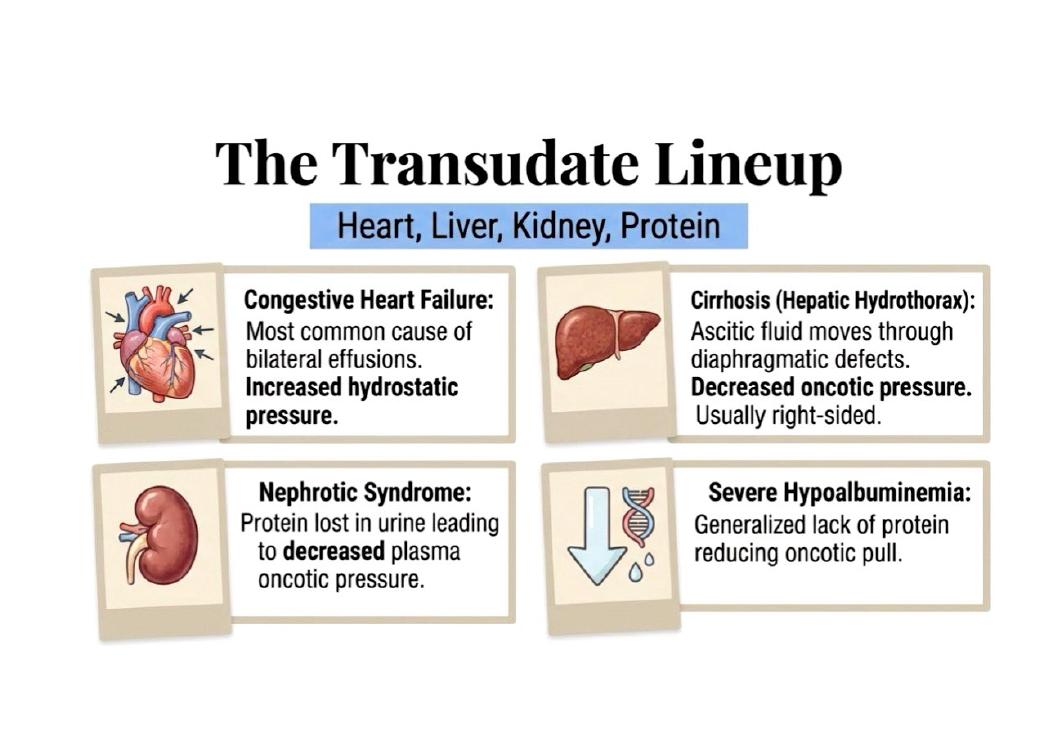
- Likely causes: transudates: heart failure, cirrhosis, nephrotic syndrome. (Internal Medicine Respiratory CAT 1: 30 MCQs and 5 short answer questions)
- Topics tested: HIV and the gut, diarrhoea (infectious and non-infectious), alcoholic liver disease, hepatitis A, B and C, cirrhosis, liver tumours, cholera, shigella, gallstones and pancreatitis. (Internal Medicine CAT 1 (MBIM 6112), 2019/2020: gastroenterology and hepatology,)
- Topics tested: jaundice and liver tests, alcoholic liver disease, hepatitis B and C, primary biliary cirrhosis, NASH, Child-Pugh score, GI bleeding, acute pancreatitis, bone marrow failure, haemophilia and myelodysplasia. (Internal Medicine CAT 1 (MBChB 4), 2022: liver, pancreas and bone marrow, 30 MCQ)
Study material on Cirrhosis
- Liver Histology & Physiology
- Liver Histology & Physiology
- pathology essays
- systemic pathology essays
- CRUSH COURSE (PART 2) Clinical Chem Patho
- Internal Medicine CAT 1 (MBChB 4), 2022: liver, pancreas and bone marrow, 30 MCQs and 2 short answers
- Junior Clerkship in Internal Medicine (MBIM4100) main exam, Paper One: 31 January 2024
- Hepatitis B and the approach to hepatitis
- Liver Function Tests (LFTs)
- Internal Medicine CAT 1 (MBIM 6112), 2019/2020: gastroenterology and hepatology, 30 MCQs and 4 short answers
- Liver Histology, Physiology and Pathology — Practice Questions
- Liver Histology, Physiology and Pathology — Practice Questions
- Liver Histology, Physiology and Pathology — Practice Questions
- Liver Histology, Physiology and Pathology — Practice Questions
- Liver Histology, Physiology and Pathology — Practice Questions
- Liver Histology, Physiology and Pathology — Practice Questions
Images
Practice questions on Cirrhosis
A patient with hepatic cirrhosis requires a drug with high first-pass metabolism. Which pharmacokinetic parameter change would you most expect?
- Decreased bioavailability
- Decreased volume of distribution
- No change in bioavailability
- Increased bioavailability
Answer: D. Hepatic cirrhosis reduces first-pass metabolism, so less drug is metabolized before reaching systemic circulation, resulting in increased bioavailability and risk of toxicity. ---
A 62-year-old male with chronic Hepatitis C and cirrhosis has a solitary liver mass. Which tumor marker, if >1000 ng/ml, is highly suggestive of HCC?
- CA 19-9
- CEA
- Alpha-fetoprotein (AFP)
- CA-125
Answer: C. Markedly elevated levels of Alpha-fetoprotein (AFP) are highly specific for HCC in the setting of chronic liver disease (though its sensitivity varies). ---
Gynecomastia in a patient with liver cirrhosis occurs because of
- Direct oestrogen secretion by hepatocellular carcinoma cells
- Impaired hepatic metabolism of oestrogens causing relative excess
- Increased androgen production stimulating breast ductal growth
- Portal hypertension causing direct hormonal effects on breast tissue
Answer: B. Cirrhosis impairs hepatic oestrogen metabolism, leading to relative oestrogen excess over androgens. This oestrogen-androgen imbalance drives ductal proliferation causing gynecomastia. ---
A patient with advanced alcoholic cirrhosis develops sudden massive haematemesis. Emergency endoscopy reveals ruptured oesophageal varices. What is the mortality rate from this first bleeding episode?
- Approximately 70–80% without surgical ligation
- Approximately 25–30% with optimal medical management
- Approximately 50% despite intervention
- Approximately 10–15% even without treatment
Answer: C. Approximately 50% of patients die from the first variceal bleeding episode from direct haemorrhage or hepatic coma from the protein load combined with hypovolaemic shock. ---
A 50-year-old female with a history of chronic hepatitis C develops ascites and esophageal varices. Liver biopsy shows micronodular cirrhosis. What is the most likely complication leading to this advanced liver disease?
- Hepatitis B co-infection
- Alcoholic liver disease
- Non-alcoholic fatty liver disease (NAFLD)
- Hepatocellular carcinoma
Answer: A. While chronic Hepatitis C is a direct cause of cirrhosis, co-infection with Hepatitis B can accelerate the progression to cirrhosis and hepatocellular carcinoma. In the context of already advanced disease, it's a significant factor that would have contributed to the severity and progression. ---
A 60-year-old male with known cirrhosis develops altered mental status, asterixis, and a musty odor to his breath. Lab results show elevated ammonia. What is the most likely diagnosis?
- Hepatic encephalopathy
- Intracranial hemorrhage
- Uremic encephalopathy
- Wernicke's encephalopathy
Answer: A. Hepatic encephalopathy is a complication of advanced liver disease characterized by neurological dysfunction due to the accumulation of toxins, such as ammonia, in the brain. Asterixis (flapping tremor) and a musty breath odor are classic signs. ---