Nephrotic Syndrome
Option A is nephritis and option C is nephrotic syndrome.
Nephrotic Syndrome
- Definition : Glomerular protein permeability increase
- Criteria : Proteinuria 2.5 g/day + edema + hypoproteinemia + hyperlipidemia
- Selectivity Index : (UIgG/PIgG)/(Ualb/Palb) × 100
- Laboratory findings : ↑α2 globulins, hypercholesterolemia
Read this in KIDNEY FUNCTION TESTS & GASTRIC FUNCTION
Nephrotic Syndrome
- Proteinuria 2.5 g/day , hypoalbuminemia , oedema , hyperlipidemia .
- Selectivity index (IgG/Albumin clearance ratio) tracks disease progression.
- Liver compensates by increasing α₂ globulins (e.g., α₂ macroglobulin).
Read this in Liver Function Tests (LFTs)
What our notes say
- Option A is nephritis and option C is nephrotic syndrome. (Paediatrics main exam (MBPE 4300): 24 January 2022, Paper One, 100 MCQs, 2 short)
- An urgent renal biopsy is needed to confirm a diagnosis of nephrotic syndrome (Paediatrics main exam (MBPE 4300): 24 January 2022, Paper One, 100 MCQs, 2 short)
- A child with nephrotic syndrome who has poor perfusion is intravascularly depleted, and 20% albumin (with a diuretic) is given to restore it. (Paediatrics Year 6 MBChB end of semester CAT: clinical case MCQs, 29 of 30 quest)
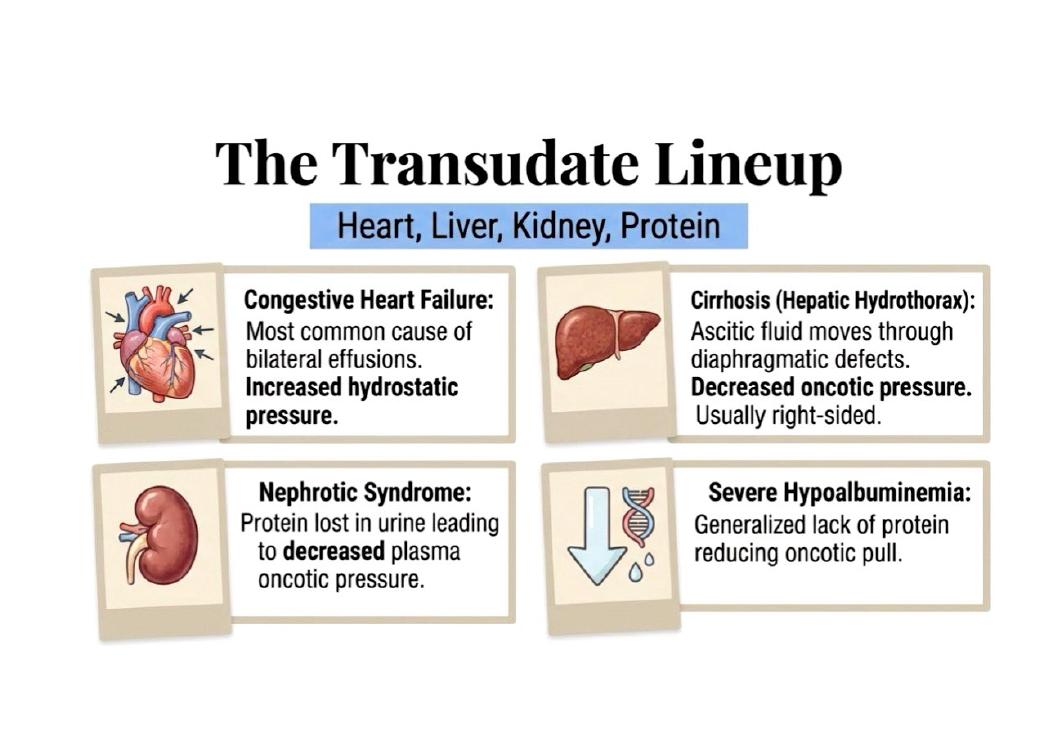
- | Nephrotic syndrome, hypoalbuminaemia | Malignancy (lung, breast, lymphoma, mesothelioma, metastases) | (Pleural Effusion)
- Hypercoagulability (cancer, pregnancy and the pill, thrombophilia, nephrotic syndrome, sepsis, HIV, TB). (DVT and Venous Thromboembolism (with Pulmonary Embolism))
- Medical: age over 60, obesity, heart failure, nephrotic syndrome, inflammatory bowel disease, HIV, TB, polycythaemia, antiphospholipid syndrome. (DVT and Venous Thromboembolism (with Pulmonary Embolism))
Study material on Nephrotic Syndrome
- Chemical Pathology MCQs: Clinical Chemistry, Endocrine & Renal
- Exam Prep: Skin Infections, Psoriasis & Pemphigus
- FSGS & HIV Nephropathy: Causes, Symptoms, Diagnosis & Prognosis
- renal pathology
- Paediatrics main exam (MBPE 4300): 24 January 2022, Paper One, 100 MCQs, 2 short essays and 2 long essays
- Glomerular Diseases: Classification, Histology & Pathology
- Paediatrics end of 3rd trimester exam (MBPE 4300): 11 January 2022, congenital heart disease essay and 20 MCQs
- Nephrotic and nephritic syndromes
- Internal Medicine Respiratory CAT 1: 30 MCQs and 5 short answer questions
- Male Reproductive & Urinary Tract Pathology MCQs | MKU Year 3 Medicine
Images
Practice questions on Nephrotic Syndrome
In nephrotic syndrome, the urine dipstick finding is
- 4+ proteinuria
- Hematuria only
- Glucosuria
- Leukocyturia
Answer: A. Heavy proteinuria (≥3.5 g/day) is the hallmark; massive protein loss drives hypoalbuminemia and edema. ---
A patient with nephrotic syndrome is most likely to have which of the following?
- Haematuria and hypertension only
- Proteinuria >3.5 g/day
- Hypernatraemia
- Low cholesterol
- Metabolic alkalosis
Answer: B. Nephrotic syndrome is defined by massive proteinuria, specifically greater than 3.5 g/day.
A patient with nephrotic syndrome has edema and proteinuria >3.5 g/day. What is the most likely biochemical abnormality?
- Hypoalbuminemia
- Hypercalcemia
- Hyperkalemia
- Hyperphosphatemia Correct
Answer: A. Massive proteinuria in nephrotic syndrome leads to hypoalbuminemia, causing decreased oncotic pressure and edema. ---
In nephrotic syndrome, the urine dipstick finding is ---
- 4+ proteinuria
- Hematuria only
- Glucosuria
- Leukocyturia
Answer: A.