Axis
The relationship of the long axis of the fetus to the long axis of the mother is called:
What our notes say
- The relationship of the long axis of the fetus to the long axis of the mother is called: (Junior Clerkship in Reproductive Health (MBOG 4200): end of year examination, 4 )
- Sheehan's syndrome is pituitary failure, which leaves the mineralocorticoid axis working, so a full adrenal crisis is unusual. (Internal Medicine 4th Year Endocrinology CAT: 30 MCQs)
- Cyanosis with left axis deviation and left ventricular hypertrophy is the signature of tricuspid atresia. (Paediatrics end of fourth year special supplementary exam: August 2019, Paper On)
- In the first years after menarche the hypothalamic-pituitary-ovarian axis is immature, so cycles are anovulatory. (Gynaecology Year 4 CAT (MBOG 4212): 30 November 2018, ovarian cysts, abnormal me)
- The heart is enlarged and pushed up and to the left, so ECG and chest X-ray changes (left axis deviation, flattened T waves, a larger heart shadow) can look pathological. (Physiological changes in pregnancy)
- o There is swelling of the subcutaneous tissues over nail bed o The overlying skin is shiny, tense and red o Obliteration of the skin creases is seen o The swelling involves the nail bed and the curvature in its long axis increases all dimensions (Examination of Respiratory system — Past Paper Questions & Answers)
Study material on Axis
- Thyroid Hormone
- Junior Clerkship in Reproductive Health (MBOG 4200): end of year examination, 4 July 2019
- Pharmacology Cheat Code
- Master First-Year Anatomy: Must-Know Essays & Key Concepts
- makeup cat with ans
- CVS History & Physical Exam: Symptoms, Chest Pain & Syncope
- LECTURE 4: Thyroid Hormones
Images
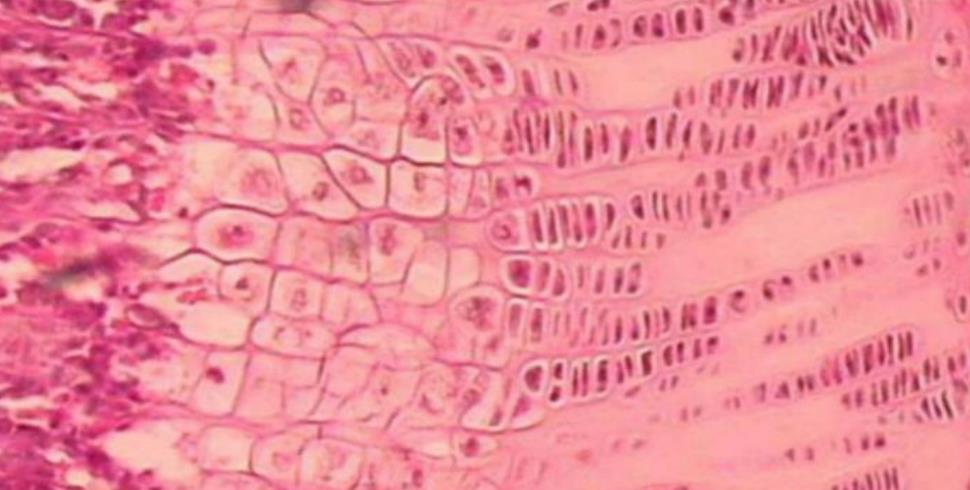
Practice questions on Axis
In the developing embryo, limb buds form along an anterior-posterior axis as directed by a zone of polarizing activity (ZPA) in the mesenchyme. A product of which of the following genes is most important in signaling by the ZPA?
- Fibroblast growth factor 8
- Homeobox-B8
- Sonic hedgehog
- Transforming growth factor-beta
Answer: C. Shh plays a role in this induction of limb bud development. The Shh protein creates a gradient effect upon developing tissues, near to far, guiding proliferation, differentiation, and movement of cells. ---
In the hypothalamic-pituitary-thyroid (HPT) axis, elevated free T4 levels cause
- Increased TSH but decreased TRH
- More TRH and TSH release
- Increased thyroglobulin synthesis
- Suppression of TRH and TSH (negative feedback)
Answer: D. High levels of free T4 (and T3) exert negative feedback on the hypothalamus and pituitary, suppressing the release of TRH and TSH, respectively. This mechanism regulates thyroid hormone production. ---
Feedback regulation of the HPA axis involves negative feedback of cortisol at the level of
- Adrenal gland only
- Hypothalamus and anterior pituitary
- Posterior pituitary only
- Kidney
Answer: B. Cortisol inhibits CRH release from the hypothalamus and ACTH release from the anterior pituitary. ---
The axis of the hepatic acinus is formed by which vessels?
- Tributaries of the hepatic artery and portal vein
- The central vein and the sublobular vein
- The biliary canaliculi
- The hepatic vein and vena cava
Answer: A. The acinus is centered on the terminal branches of the portal vein and hepatic artery.
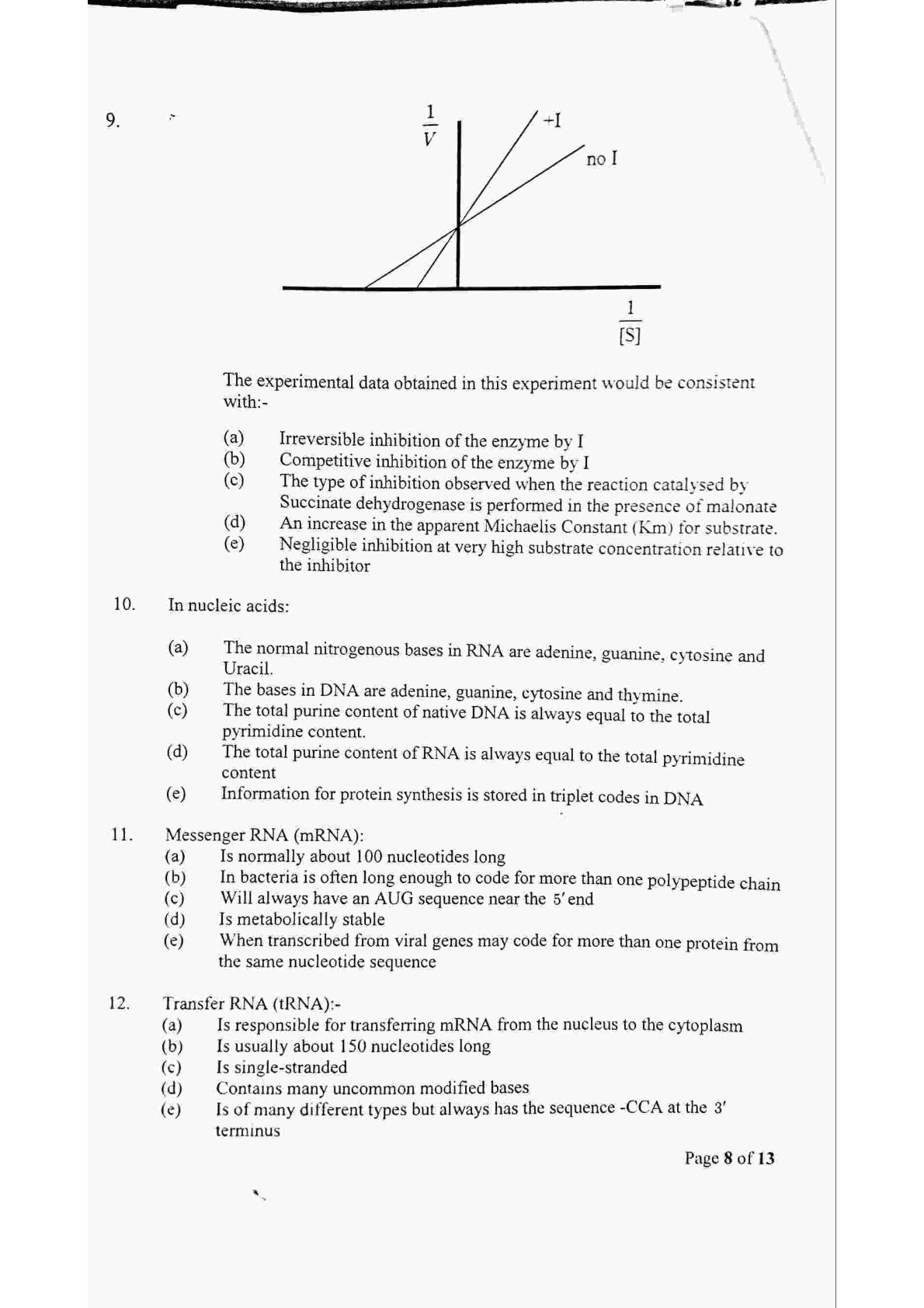 The experimental data obtained in this experiment would be consistent with ---
- Irreversible inhibition of the enzyme by I
- Competitive inhibition of the enzyme by I
- The type of inhibition observed when the reaction catalysed by Succinate dehydrogenase is performed in the presence of malonate
- An increase in the apparent Michaelis Constant (Km) for substrate.
- Negligible inhibition at very high substrate concentration relative to the inhibitor
Answer: A.