Testis
Intro: This is the largest section — kidney parenchymal disease (glomerular, tubulointerstitial, vascular), urinary tract obstruction/stones, renal tumors, lower urinary tract disease (ureter, bladder, urethra), and male reproductive pathology (penis, testis, prostate).
TESTIS
- Cryptorchidism — undescended testis; 3–5× ↑ testicular cancer risk (via intratubular germ cell neoplasia); orchiopexy reduces risk
- Torsion — venous obstruction first (arteries patent longer); Neonatal (no anatomic defect) vs Adult (" bell-clapper " deformity); surgical emergency, viable if untwisted within ~6h
- Testicular Germ Cell Tumors (95% of postpubertal testis tumors; all malignant; isochromosome i(12p) in virtually all):
- Seminoma → lymphatic spread (iliac/para-aortic nodes) late hematogenous; Nonseminomatous → early lymphatic + hematogenous (liver, lung)
Read this in Exam Prep: Skin Infections, Psoriasis & Pemphigus
What our notes say
- Intro: This is the largest section — kidney parenchymal disease (glomerular, tubulointerstitial, vascular), urinary tract obstruction/stones, renal tumors, lower urinary tract disease (ureter, bladder, urethra), and male reproductive pathology (penis, testis, prostate). (Exam Prep: Skin Infections, Psoriasis & Pemphigus)
- Glomerular diseases and prostate/testis tumors are the highest-yield exam topics here. (Exam Prep: Skin Infections, Psoriasis & Pemphigus)
- The whole process takes about 64–74 days in the seminiferous tubules, supported by Sertoli cells (blood-testis barrier, nutrition) and driven by FSH, LH and testosterone from Leydig cells. (Gametogenesis, fertilisation and the first two weeks of development)
- Testis - seminiferous tubules, interstitial Leydig cells, and developing spermatozoa (Aponeurosis — Histology Question Bank)
- Immune privilege — certain sites (eye, testis, brain) limit immune cell access (Medical MCQs: Chemical Pathology & Haematology Exam Review)
- Tunica vaginalis completely surrounds testis and epididymis (Pathology Spot Exam Revision: Lymphoma, Adenoma, Appendicitis, FISH)
Study material on Testis
- Quick Guide: Male Reproductive System Pathology, Testis, Penis
- MALE REPRODUCTIVE SYSTEM PATHOLOGY
- Pathology Spot Exam Revision: Lymphoma, Adenoma, Appendicitis, FISH
- Male Reproductive System Pathology
- Penile & Testicular Pathologies: Hypospadias, Tumors, Torsion – Male Reproductiv
- Exam Prep: Skin Infections, Psoriasis & Pemphigus
- pathology essays
- systemic pathology essays
- Master First-Year Anatomy: Must-Know Essays & Key Concepts
- Embryology — Past Paper Questions & Answers
- Medical Physiology Ii
- Male Reproductive System — Clinical MCQs
Images
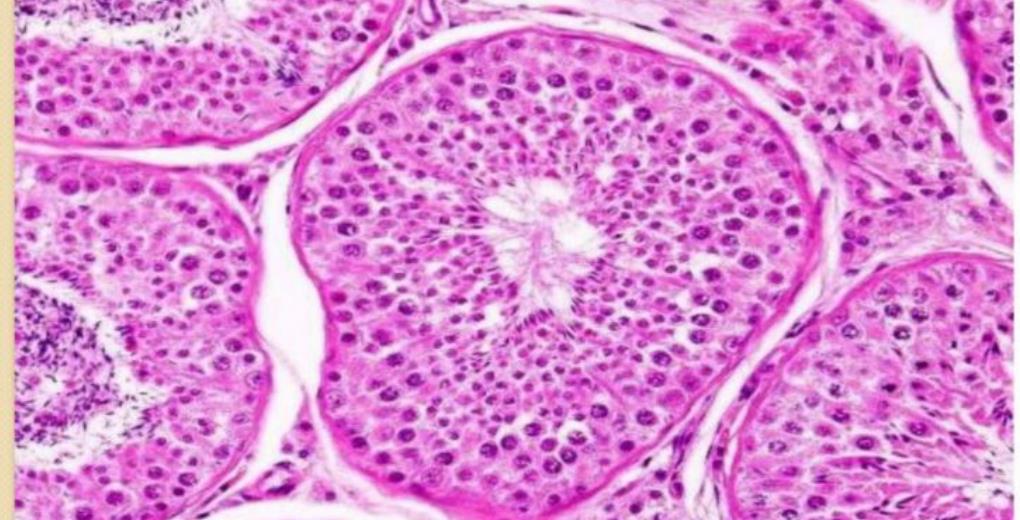
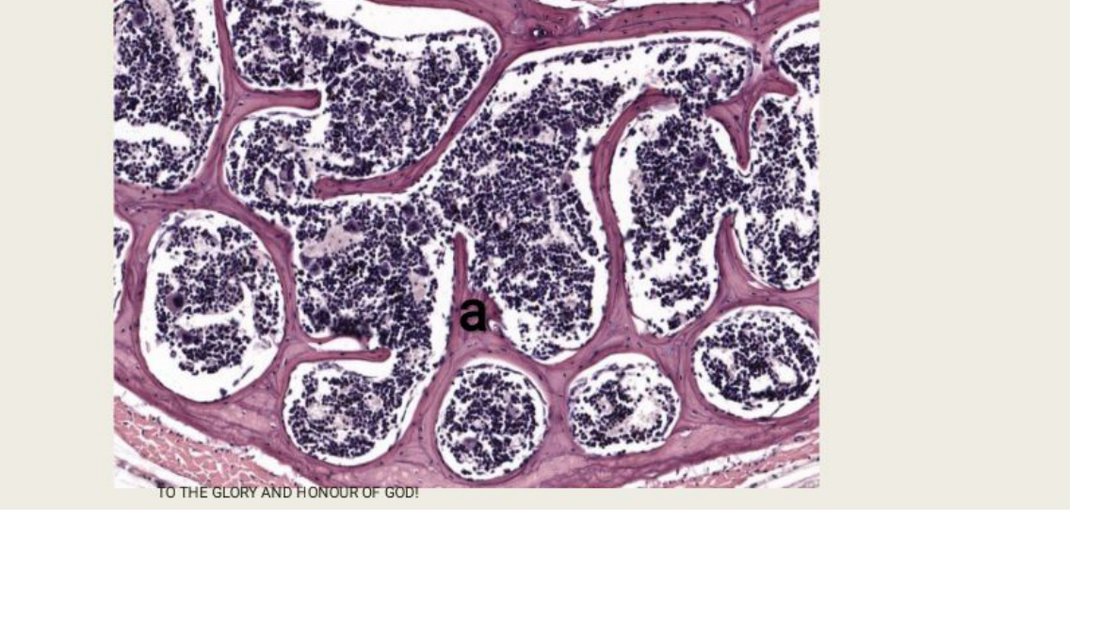
Practice questions on Testis
A newborn male infant is examined. There is a palpable right testis, but no left testis, in the scrotal sac. The infant has no other abnormalities noted. Which of the following is the most likely abnormality involving the gonads of this infant?
- Agenesis
- Fusion
- Hypopituitarism
- Incomplete descent
- Leydig cell aplasia F. Venous atresia
Answer: D. Cryptorchidism is one of the most common problems involving the testis. Descent may be delayed. It can sometimes be chemically induced. Surgical correction may be employed. If not corrected, the affected gonad will not have spermatogenesis, and there will be an increased risk for carcinoma. ---
A 2-year-old boy has enlargement of the left testis. An ultrasound scan shows a 2 cm solid mass within the body of the testis. Serum AFP is 226 ng/mL. Which of the following neoplasms is this child most likely to have?
- Leydig cell tumor
- Neuroblastoma
- Rhabdomyosarcoma
- Teratoma
Answer: D. The most common testicular tumor under the age of 3 is a yolk sac tumor (infantile embryonal carcinoma). However, finding any testicular tumor in children is uncommon. The prognosis is good in most cases. ---
The blood-testis barrier is formed by tight junctions between ---
- Leydig cells
- Sertoli cells
- Spermatids
- Primary spermatogonia
- Occurs only after chronic exposure
Answer: B.
Incorrect about the blood-testis barrier ---
- Develops before spermatogenesis
- Leydig cells are part of it
- Disruption makes spermatogonia prone to immune attack
- All of the above
- Limited to a single tissue compartment
Answer: B.