Skin
The following are presumptive skin signs of pregnancy EXCEPT:
Skin
- Temperature — hot in thyrotoxicosis, febrile illness; cold and clammy in shock
- Hydration — assess skin turgor (pinch skin)
- Pallor — check palms, conjunctiva, tongue
- Jaundice — check sclera, posterior tongue, skin
- Cyanosis — bluish discolouration; check hands (peripheral) and tongue (central)
Read this in General Clinical Examination: Revision Notes & Key Signs
Skin
- • Temperature – Thyrotoxicosis, febrile illness, shock,
- • Hydration – pinch the skin
- • Pallor – Check palms, conjunctiva and tongue
- • Jaundice – Sclera, Posterior tongue and skin
- • Cyanosis –Bluish discoloration hands and tongue, central cyanosis vs peripheral cyanosis.
Read this in General examination (2) — Past Paper Questions & Answers
What our notes say
- The following are presumptive skin signs of pregnancy EXCEPT: (Reproductive Health 1 End of Trimester CAT: 40 MCQs and 4 short answers)
- Pigmentation, striae and vascular spiders are classic skin changes. (Reproductive Health 1 End of Trimester CAT: 40 MCQs and 4 short answers)
- The skin disease is limited to hands, forearms and face. (Internal Medicine Rheumatology CAT: 30 MCQs and 5 short answer questions)
- Other tests: FeNO, skin-prick or specific IgE (allergy), blood eosinophils, bronchial provocation (methacholine), chest X-ray (to exclude other causes). (Asthma)
- Examination: clubbing, fine bibasal crackles, skin or joint signs of CTD, signs of pulmonary hypertension and right heart failure. (Interstitial Lung Diseases)
- Skin changes: linea nigra, chloasma (melasma) and striae gravidarum. (Reproductive Health 1 End of Trimester CAT: November 2018)
Study material on Skin
- Exam Prep: Skin Infections, Psoriasis & Pemphigus
- Skin & Breast Pathology MCQs: Dermatological Lesions & Diseases
- Skin & Breast Pathology CAT: MKU Year 3 Medicine Exam
- Pathology of Acute Skin Inflammation: Urticaria & Eczema
- Medical Microbiology III Exam: Viruses, Fungi & Diagnosis
- Medical Entomology Questions
- Mycoses: Superficial, Cutaneous & Systemic Fungal Infections
- Immunopathology complete mcqs
- MASTER PHARMACOLOGY NOTES
- Immunopathology
- Immuno Patho MCQS
- Weekly Year 2: Microbiology Exam - June 12, 2026 (Section A: MCQs)
- General pathology — Past Paper Questions & Answers
- Medical Mycology Q&A: Fungal Pathogens, Drugs, & Diseases
- MYCOLOGY MCQs — Complete Bank
- Liver Histology, Physiology and Pathology — Practice Questions
Images
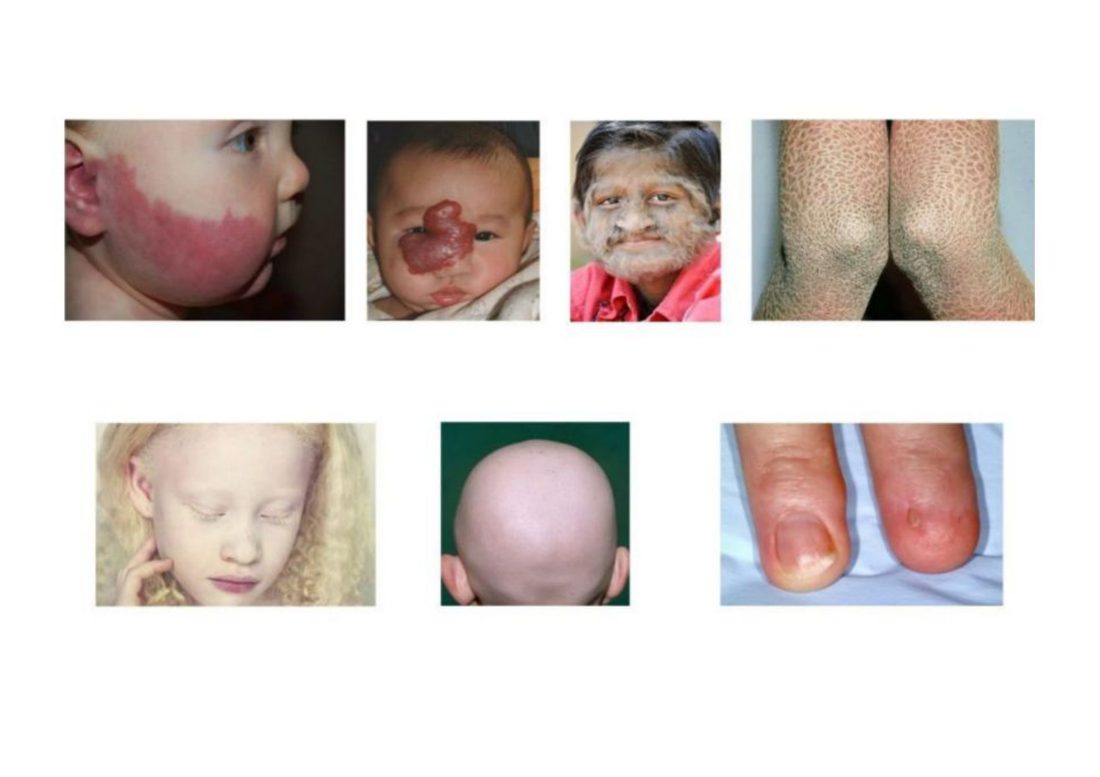
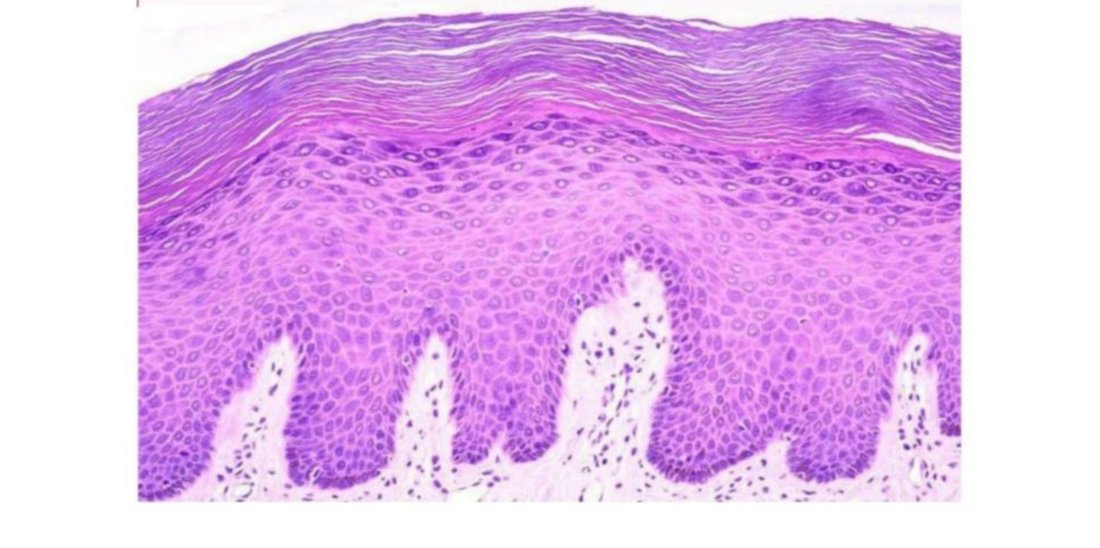
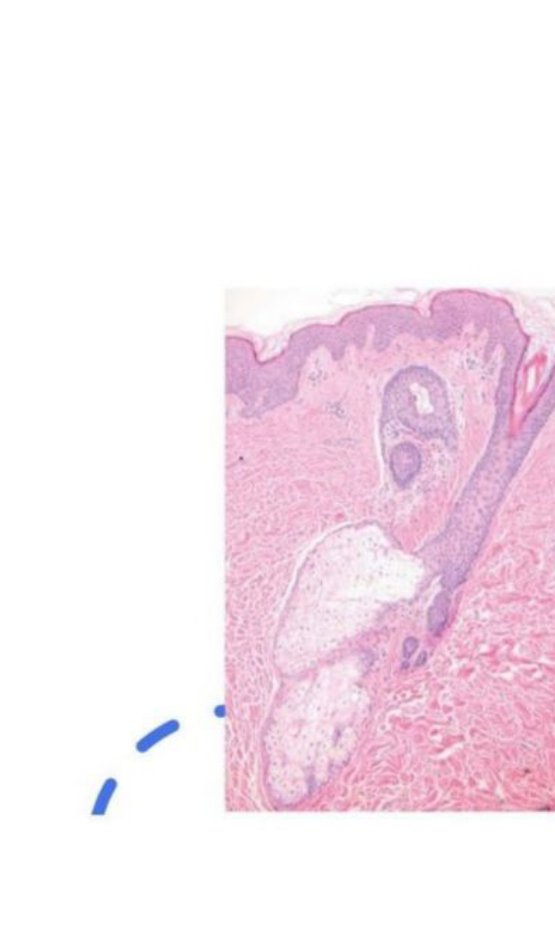
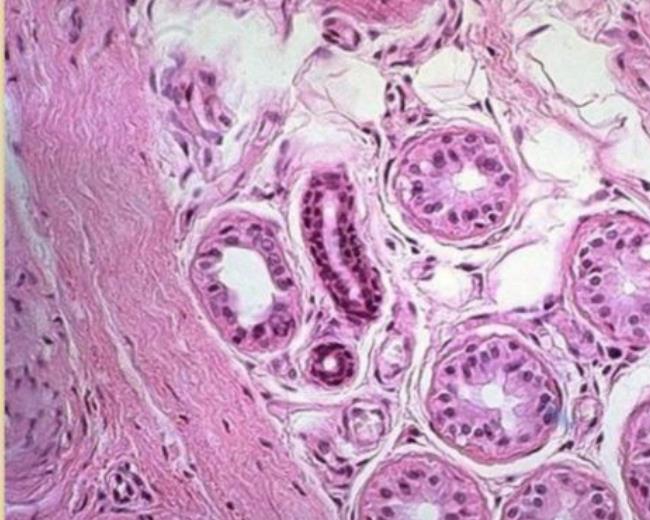
Practice questions on Skin
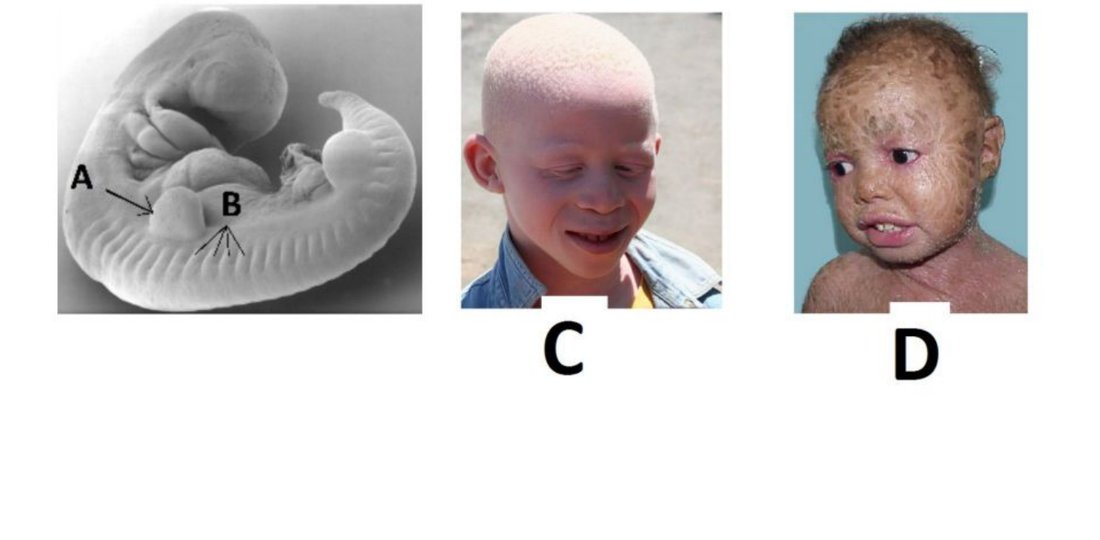
During embryonic development, neural crest cells migrate to the skin. Some of these cells differentiate to produce melanin from tyrosine. These cells may be destroyed in a patchy distribution by an autoimmune process. What is the most likely condition to result from this autoimmune process?
- Albinism
- Atrichia
- Ichthyosis
- Polythelia
- Vitiligo
Answer: E. Patchy loss of pigmentation is typically the result of an autoimmune process directed at melanocytes. ---
Which of the following secretes defensive secretions to cause irritation on human skin?
- Millipedes
- Centipedes
- American killer
- Enterobius vermicularis
- All of the above
Answer: A. Millipedes secrete defensive fluids that irritate the skin. Centipedes bite. ---
A 22-year-old woman has a congenital anemia. She has required multiple transfusions of red blood cells for many years. She now has a darker bronze colour to her skin on physical examination. Which of the following microscopic findings would most likely present in her liver?
- Steatosis in hepatocytes
- Bilirubin in canaliculi
- Hemosiderin in hepatocytes
- Glycogen in hepatocytes
- Amyloid in portal triads
Answer: C. There is 250 mg of iron in each unit of blood. The body has no mechanism for getting rid of excess iron. A small amount of iron is lost with normal desquamation of epithelia, and menstruating women will lose a bit more. The excess iron becomes storage iron, or hemosiderin. Over time, hemosiderosis involves more and more tissues of the body, particularly the liver, but also skin (bronze colour), heart (with heart fail
Which factor MOST limits drug absorption through the skin?
- Surface area
- Blood flow to the skin
- Stratum corneum barrier
- Skin temperature
Answer: C. The stratum corneum (outermost layer of epidermis) is a lipid-rich barrier that significantly limits transdermal drug penetration. Only lipophilic, small molecules (<500 Da) penetrate effectively. ---
A small population exhibits high frequency of "blue-skin" from one couple. This is an example of
- Mutation
- Heterozygote advantage
- Sexual selection
- Genetic drift
- Natural selection
Answer: D. In small populations, rare traits can increase in frequency due to genetic drift, especially if they originate from a small number of founders. ---
Albinism is a hereditary disease due to absence of the skin pigment melanin. The allele for albinism is recessive to the allele for normal pigment. One person in 10,000 is albino. What is the frequency of the dominant allele?
- 0.1
- 0.01
- 0.09
- 0.99
Answer: B. If 1/10,000 is albino, then q² = 0.0001, so q = 0.01. Therefore, p = 1 - 0.01 = 0.99. ---