Breast
Give vitamin K if not given, start expressed breast milk by nasogastric tube as soon as she is stable, and support the mother.
Treatment at a glance
- Early: surgery ± chemotherapy (anthracycline then taxane), then endocrine therapy for hormone-receptor-positive disease
- HER2-positive: add trastuzumab
Breast
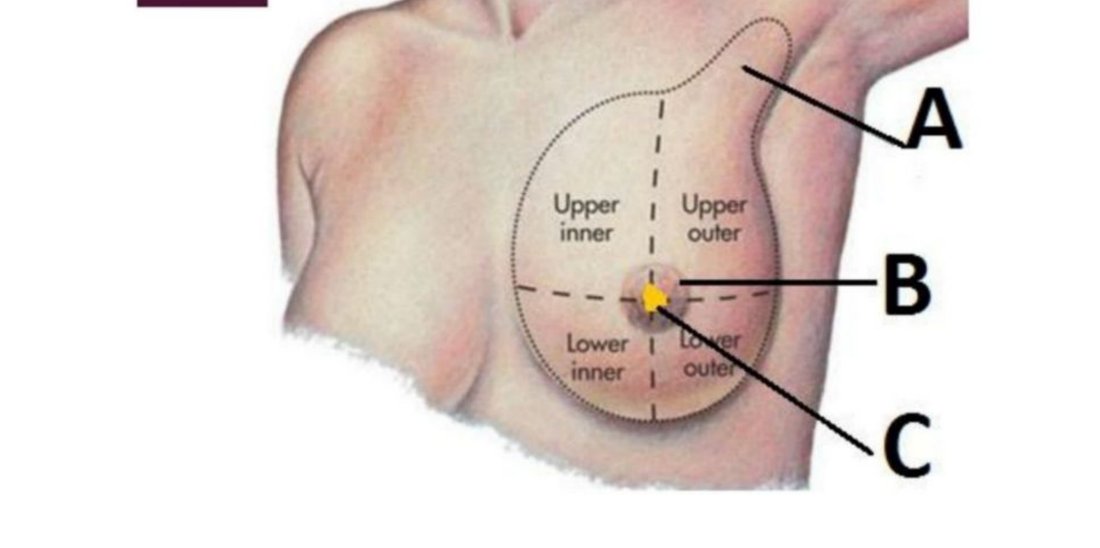
- • Should be conducted with a chaperone, patient disrobed to the waist, the arms should be in a relaxed position by the sides.
- • Requires tact and sensitivity. Inspect with patient seated arms on the side, seated arms raised and then with patient supine.
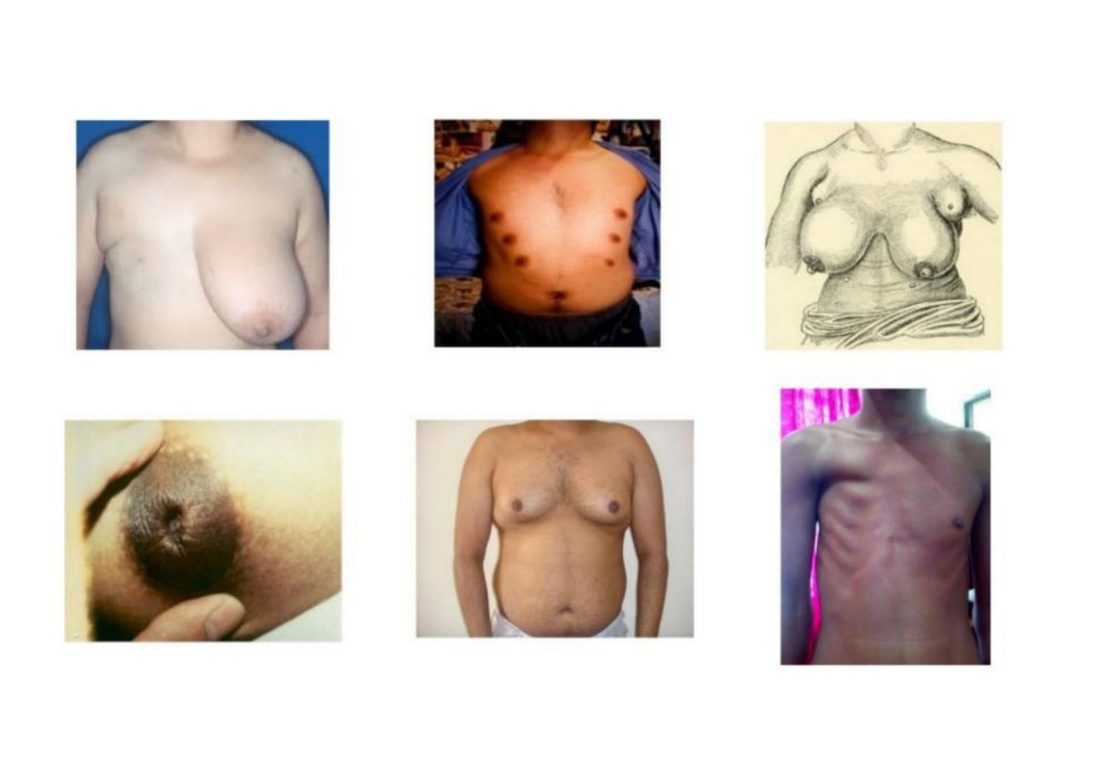
- • On inspection – asymmetry, contour (e.g. any dimpling) and colour of the breasts. Check for nipple inversion
- • Palpate for masses - Use the pads of your middle three fingers to palpate the breast, using rotatory movements gently to compress the tissue against the chest wall. Proceed systematically to examine all quadrants, the tail and areola
- See the attached original page image.
Read this in General examination (2) — Past Paper Questions & Answers
What our notes say
- Give vitamin K if not given, start expressed breast milk by nasogastric tube as soon as she is stable, and support the mother. (Integrated case paper: Medicine, Surgery, Gynaecology and Paediatrics (160 marks)
- The rate of milk synthesis is not related to how full the breast is (Paediatrics Senior Clerkship end of 2nd semester exam: 4 October 2021, 50 MCQs)
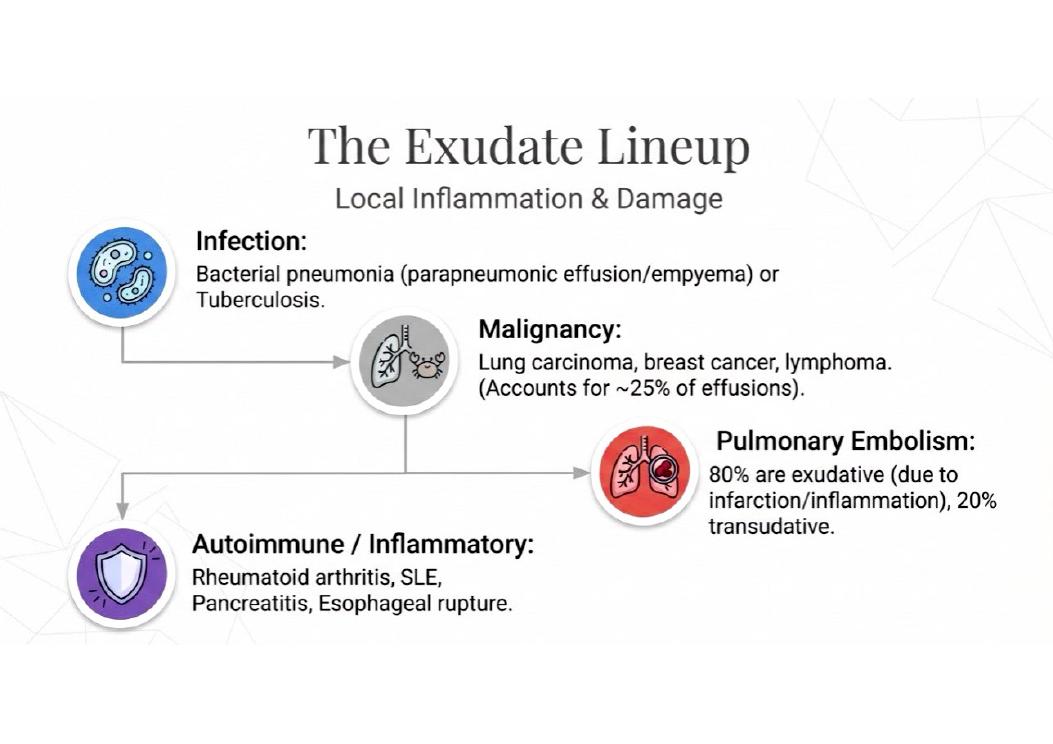
- | Nephrotic syndrome, hypoalbuminaemia | Malignancy (lung, breast, lymphoma, mesothelioma, metastases) | (Pleural Effusion)
- Breast changes: enlargement, tenderness, darkening of the areola and prominent Montgomery tubercles. (Reproductive Health 1 End of Trimester CAT: November 2018)
- Examination: weight, BP, pallor, breasts, fundal height, lie, presentation, fetal heart. (Reproductive Health 1 End of Trimester CAT: ectopic pregnancy, ANC and abortion )
- In girls it usually starts between 8 and 13 years with breast budding, and in boys between 9 and 14 with testicular enlargement. (Year 4 Gynaecology CAT (MBOG 4212): 13 December 2019)
Study material on Breast
- Breast mcqs
- Disorders of the Vagina and Breast
- Breast Carcinoma: Understanding Types, Receptors & Treatment
- Breast Pathology: Developmental Disorders, Pain, Discharge, Masses
- Benign Breast Epithelial Lesions: Types, Risk & Pathology
- Skin & Breast Pathology CAT: MKU Year 3 Medicine Exam
- Breast Inflammation: Mastitis, Periductal Mastitis & Duct Ectasia
- Breast Cancer Guide: Epidemiology, Risk Factors & Classification
- Skin & Breast Pathology MCQs: Dermatological Lesions & Diseases
- Exam Prep: Skin Infections, Psoriasis & Pemphigus
- Disorders of the Vagina and Breast
- Female Reproductive Pathology — MCQ Quiz
- Cell injury mcqs — Past Paper Questions & Answers
- ONCOPATHOLOGY MCQ EXAMINATION HAllmarks of Cancer 1,2 &3
- ONCOPATHOLOGY MCQs - HALLMARKS OF CANCER
- Oncopathology Hallmarks of Cancer MCQs
Images
Practice questions on Breast
A 48-year-old woman with breast cancer develops a right pleural effusion. Thoracentesis yields fluid protein of 5.2 g/dL, serum protein 6.8 g/dL, fluid LDH 420 U/L, and serum LDH 310 U/L. Cytology shows malignant cells. What is the most likely type of effusion?
- Transudative
- Exudative
- Malignant
- Serous
Answer: C. Using Light's criteria, this is an exudative effusion: Fluid protein/serum protein ratio is 5.2/6.8 = 0.76 ( > 0.5), and fluid LDH/serum LDH ratio is 420/310 = 1.35 ( > 0.6). The presence of malignant cells in the cytology confirms it as a malignant effusion, which is a subtype of exudative effusion.
A 33-year-old woman with breast cancer is found to have HER2/neu gene amplification. Which of the following best describes the mechanism by which HER2/neu promotes oncogenesis?
- It acts as a transcription factor to promote cell growth.
- It is a receptor tyrosine kinase that stimulates downstream signaling pathways involved in cell proliferation and survival.
- It inhibits apoptosis by stabilizing p53.
- It directly causes DNA mutations leading to genomic instability.
Answer: B. HER2/neu (ERBB2) is a receptor tyrosine kinase. Amplification leads to increased expression and constitutive activation, which drives downstream signaling pathways (e.g., PI3K/Akt, MAPK) promoting cell growth, survival, and angiogenesis, contributing to oncogenesis.
A 19-year-old woman gives birth to her first child. She begins breast feeding the infant. She continues breast feeding for almost a year with no difficulties and no complications. Which of the following cellular processes that began in the breast during pregnancy allowed her to nurse the infant for this period of time?
- Stromal hypertrophy
- Epithelial dysplasia
- Steatocyte atrophy
- Ductal epithelial metaplasia
- Lobular hyperplasia
Answer: E. There is an increase in the breast lobules under hormonal influence, primarily progesterone with pregnancy, to provide for lactation. ---
A 48-year-old woman with breast cancer develops a right pleural effusion. Thoracentesis yields fluid protein of 5.2 g/dL, serum protein 6.8 g/dL, fluid LDH 420 U/L, and serum LDH 310 U/L. Cytology shows malignant cells. Most likely type of effusion?
- Transudate
- Exudate
- Chylothorax
- Hemothorax
Answer: B. Using Light's criteria: Fluid protein/serum protein ratio (5.2/6.8 ≈ 0.76) is >0.5. Fluid LDH (420 U/L) is >2/3 the upper limit of normal serum LDH (assuming upper limit is ~200 U/L, 420 is > ~133). These findings are characteristic of an exudative effusion. Given the history of breast cancer and malignant cells on cytology, this is a malignant pleural effusion.
A 33-year-old woman with breast cancer is found to have HER2/neu gene amplification. Which of the following best describes the mechanism by which HER2/neu promotes oncogenesis?
- Increased cell proliferation and survival signaling
- Inhibition of apoptosis
- Promotion of angiogenesis
- Induction of genomic instability
Answer: A. HER2/neu is a receptor tyrosine kinase. Amplification of its gene leads to overexpression of the HER2 protein, which then dimerizes and activates downstream signaling pathways (e.g., PI3K/Akt, MAPK) that promote uncontrolled cell proliferation, survival, and growth.
A 48-year-old woman with breast cancer develops a right pleural effusion. Thoracentesis yields fluid protein of 5.2 g/dL, serum protein 6.8 g/dL, fluid LDH 420 U/L, and serum LDH 310 U/L. Cytology shows malignant cells. Most likely type of effusion?
- Transudate
- Exudate
- Chylothorax
- Hemothorax
Answer: B. This effusion is an exudate. Using Light's criteria: Fluid protein/serum protein ratio (5.2/6.8 = 0.76) is >0.5. Fluid LDH/serum LDH ratio (420/310 = 1.35) is >0.6. The presence of malignant cells further supports an exudate, specifically a malignant effusion.